
Risk transparency has rapidly emerged as a board-level priority in construction, as complex projects, greater regulatory demands, and market uncertainty call for sharper visibility and smarter decision-making. Today, boards seek more than just periodic status reports. They demand real-time, transparent risk data supported by cutting-edge construction project management software, fortified by AI-driven construction management and robust risk mitigation in construction. Zepth Core delivers an integrated solution bridging these needs with forward-thinking technology, ensuring risk is visible, measurable, and actionable across the executive suite.
Why Risk Transparency Now Dominates Executive Agendas
Construction projects are inherently risky. Delays, cost overruns, safety incidents, and compliance lapses have long posed threats to timelines and margins. With today’s fast-evolving regulatory landscape and rising complexity of projects—such as sustainable construction mandates, tight labor markets, and heightened client expectations—risk exposure is widening and the consequences of oversight are more severe. Board members understand that hidden risks can trigger cascading impacts: from increased costs to reputational damage.
Modern C-suites ask: How can we ensure project risk data is accessible, accurate, and actionable across the organization? The answer lies in digitization. Cloud-based construction lifecycle management software now centralizes risk logs, automates compliance tracking, and pushes alerts directly to decision-makers. With platforms like Zepth Core, AI-powered analytics, smart jobsite management tools, and a common data environment for construction are no longer nice-to-haves but vital for proactive, transparent oversight.
AI-Powered Risk Management: From Data Silos to Unified Insight
Boards benefit most when risk information is real—not historical, not filtered—and tied to a single source of truth. Zepth Core’s Risk Register offers boards a unified view by logging all potential, active, and closed risks, classifying exposures by impact, and updating statuses in real time. Its Mitigation Plans module allows teams to assign, action, and track risk-reducing tasks—directly visible on executive dashboards.
Increasingly, board directors ask questions like: “How does AI improve construction risk management?” or “Which risks have the highest probability of affecting our project budget?” AI in construction makes it possible to scan mountains of project data—incidents, weather, procurement, financials—to flag patterns that would otherwise remain hidden. With Zepth Core’s risk reporting tools, predictive insights help boards not only react, but anticipate and outmaneuver risk scenarios.
Financial Controls and Cost Transparency: Boardroom Essentials
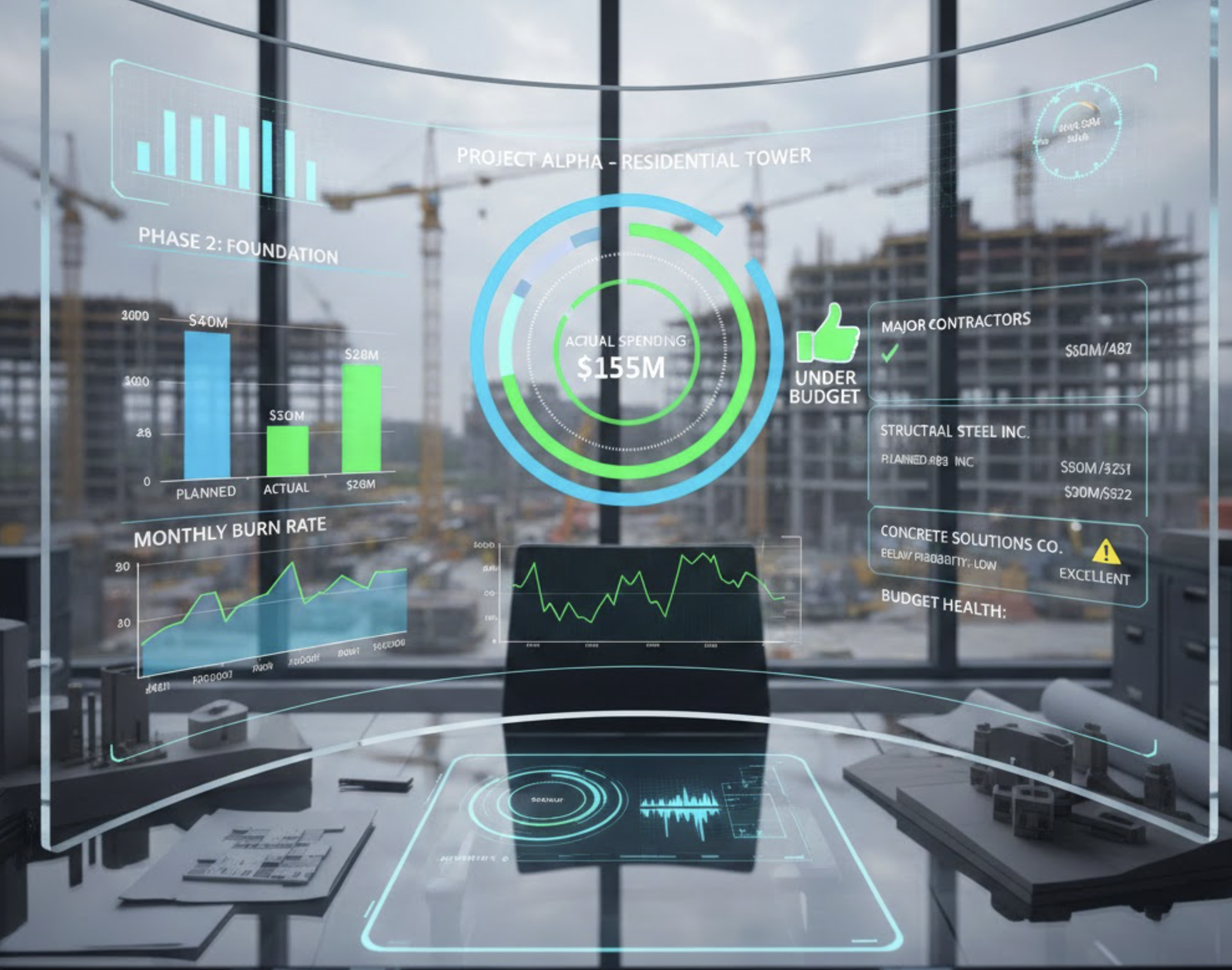
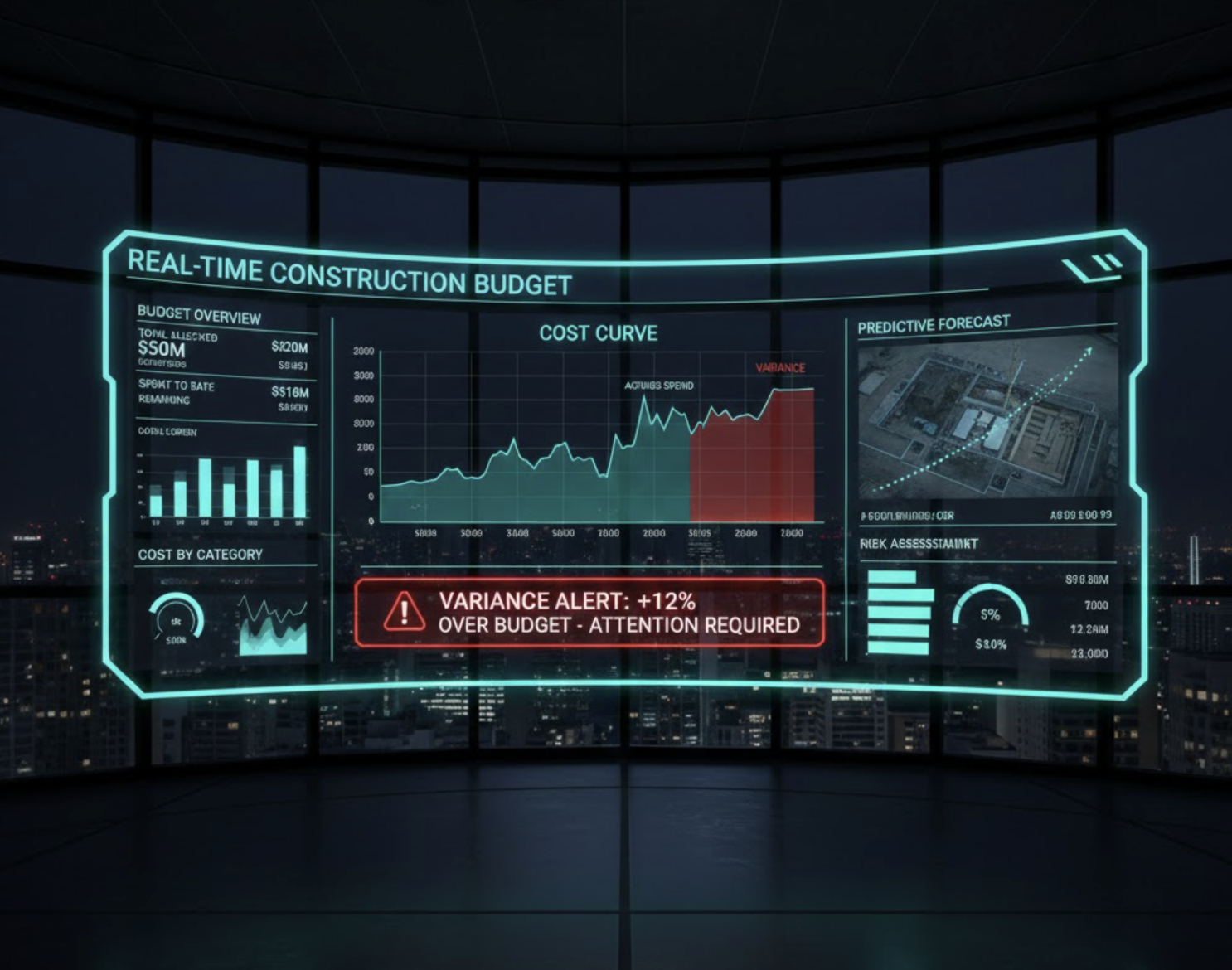
Transparency around project spending sits at the core of effective governance. Boards need to know: Where have we spent? Where are cost overruns brewing? How do we prevent future budget pain? With Zepth Core’s project cost control and construction financial management tools, these answers are real-time and granular. Project budgets, actuals, commitments, and forecast trends appear on a single dashboard, ensuring tight alignment between the site and the executive office.
Consider the daily friction construction boards face: outdated spreadsheets, fragmented submittals, and slow document transmittals that cloud the true financial status. Platforms like Zepth Core provide seamless construction document management, automated submittal workflows, and digital authority approvals. Built-in construction forecasting tools and detailed construction analytics and insights allow leaders to course-correct early—before risk transforms into loss.
- Project Cost Control: Real-time budget tracking, expenditure analysis, and variance alerts
- Risk Register & Reporting: Centralized risk log, real-time analytics, AI-driven prediction tools
- Submittals & Document Register: Streamlined submittal tracking, centralized documents, and compliance status updates
- Insights & Analytics: Automated dashboards and customizable reports for board-level overviews
- Jobsite Management: Digital progress reports, incident reporting, and HSE compliance linked to risk data
AI-Driven Reporting and Real-Time Board Oversight
The move toward AI construction automation and real-time construction project data means boards stay ahead, not behind, risk events. Features like Zepth360 empower teams to capture and link 360-degree jobsite imagery, videos, and photos directly to risk registers and progress tracking. The result is that risk transparency is more visual, interactive, and instantly shareable with executive stakeholders.
In meetings, board members often inquire: “How can construction project tracking software help us make better decisions?” The answer lies in visibility. AI-powered dashboards in Zepth Core highlight overdue tasks, compliance gaps, and risk escalation instantaneously. Integration with BIM and digital twin models further connects the physical and virtual project worlds—enabling immersive oversight and scenario modelling at the board level.
Some of the smart construction management tools boards expect include:
- Automated incident and safety violation notifications
- Structured workflows for non-conformance and snag list management
- Role-based permissions securing sensitive risk and cost data
- AI-driven trend detection for early warning on critical financials
- Authority-level tracking of compliance and statutory approval workflows
Frequently Asked Questions Within Board Discussions
One question that often arises is, What are the benefits of using AI tools for construction project risk management? AI tools automate risk identification, scan for anomalies in project data, and deliver predictive alerts, all leading to earlier intervention and better resource allocation for board-driven decisions. Another common query: How does digital transformation impact the construction industry? Digital solutions such as Zepth Core reduce manual processes, integrate data sources, foster collaboration, and equip boards with real-time, actionable insight to govern effectively.
Board-Level Risk Transparency: A Competitive Edge
Modern construction boards recognize that unmanaged risk is not just a performance issue—but a threat to the long-term value of their business. Platforms like Zepth Core are redefining the standards for transparency, harnessing AI-powered project management and construction tech innovation to proactively surface insights long before risks escalate.
The shift to unified digital ecosystems delivers on the promise of risk transparency by:
- Centralizing all risk and compliance data in a searchable, version-controlled common data environment for construction
- Enabling multi-project and portfolio-wide risk benchmarking for board comparison and prioritization
- Linking daily operational activity—daily reports, incidents, financial updates—directly to risk scoring and executive dashboards
- Supporting transparent, traceable workflows for risk mitigation assignments and progress reporting
This board-level visibility positions organizations to bid for more challenging projects, assure clients, and uphold best-in-class regulatory standards. In a rapidly digitizing sector, those who prioritize risk transparency—powered by cloud-based construction management, construction analytics and insights, and sustainable construction management—gain an unassailable edge.
Conclusion
As construction projects grow more complex and board-level accountability rises, the transparency of risk data becomes a non-negotiable priority. With Zepth Core’s integrated modules for jobsite management, document control, financials, and AI-driven risk oversight, boards gain a real-time line of sight over every aspect of project exposure. By transforming how risks are tracked, reported, and mitigated, Zepth Core ensures executive teams don’t just see risk—they master it, using technology as their competitive advantage in the digital age.