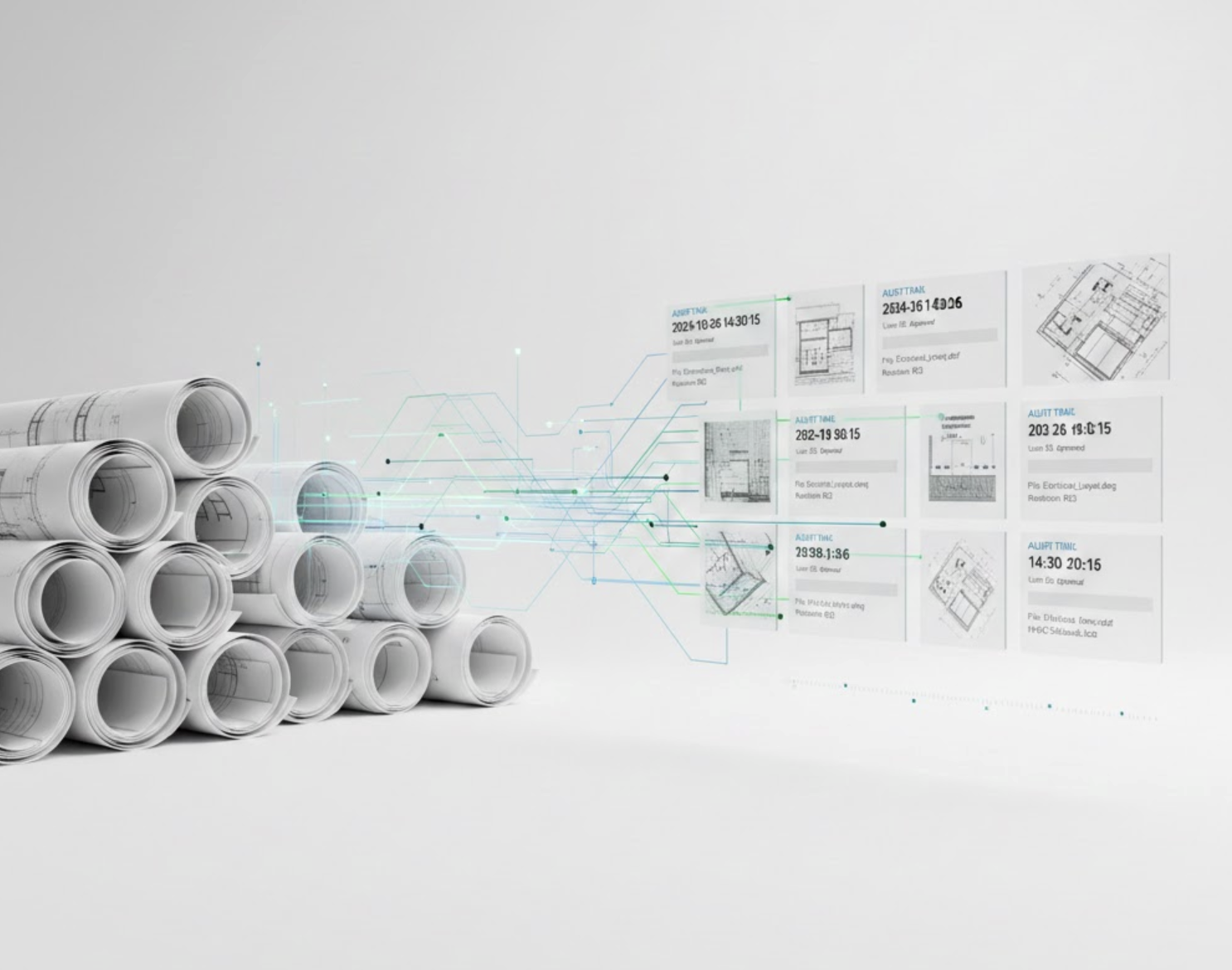

Construction project management software has transformed how leading firms organize, track, and share critical project information. At the heart of any modern construction operation lies effective construction document management—streamlining complex collaboration, ensuring compliance, and using technology to cut risk and delays. In today’s digital era, cloud-based tools, AI-powered document workflows, and robust data environments are redefining best practices, from standardized templates to real-time analytics. Here’s a deep dive into how you can build a world-class document management process, featuring Zepth Core’s advanced capabilities at every stage.
Why Construction Document Management Matters
Any construction project, regardless of scale, generates a relentless stream of documents: contracts, design drawings, RFIs, submittals, change orders, safety logs, inspection reports, photos, and endless correspondence. Traditionally, teams scattered these materials across emails, desktops, file servers, or personal cloud drives. The results? Outdated drawings, confusion, rework, and exposure to disputes and regulatory risks.
Centralized, digital document management systems—a hallmark of modern construction project management software—end this fragmentation. When every stakeholder accesses a single, current set of documents, collaboration accelerates and decisions come faster. Powerful audit trails or built-in versioning also defend against claims, while supporting requirements for retention and accountability under contract or regulation.
- Construction projects routinely handle thousands of interdependent documents.
- Poor document controls often lead to costly errors, avoidable rework, and potential legal claims.
- Centralized, cloud-based construction document management cuts these risks significantly.
- Regulations and contracts increasingly demand accurate, searchable records for years after completion.
For example, a user might ask, “Why is document management so important in construction?” The answer lies in risk and efficiency: teams need fast, reliable access to the latest information to prevent mistakes and support compliance.
Core Principles of Good Construction Document Management
To harness the full power of construction document management, start with clear principles and the right software:
- Single Source of Truth: A centralized repository keeps all project participants aligned with current, accurate data—no more searching scattered folders.
- Standardization: Naming conventions, folder structures, and review workflows remain uniform across projects. Consistency saves time and cuts confusion.
- Traceability & Accountability: Version controls, audit trails, and clear document owners add rigor to the process and clarify who is responsible for every change.
- Accessibility & Security: Cloud and mobile access ensure teams can find what they need in the field or office—while role-based permissions protect sensitive documents.
- Lifecycle Management: Robust document management spans from creation and revision to approval, distribution, and archiving—with rules for long-term retention as required by contracts or laws.
Wondering “What is a single source of truth in construction management?” It’s a system—typically cloud-based—where everyone collaborates using the same set of up-to-date information, eliminating duplicated effort and costly mistakes.
Organizational Best Practices: Structure, Naming, and Templates
Standardized Folders and File Structure
Every efficient project uses a logical, predictable file structure. This standardization makes documents easy to find and reduces errors. Adopt a directory tree such as:
- ProjectName/
├── Drawings
├── Specifications
├── Contracts
├── RFIs
├── Submittals
├── Change Orders
├── Permits
├── Reports
├── Correspondence
Add subfolders for design disciplines (architecture, structure, MEP) and project phases (design, preconstruction, construction, closeout) to further improve findability.
Consistent Naming Conventions
Effective construction document management hinges on clear, descriptive file names. A standard such as P123_ARCH_DWG_FloorPlan_L2_Rev03_2024-10-01.pdf (ProjectID_Type_Discipline_Description_Revision_Date) ensures fast searches and supports automation in systems like Zepth Core.
Templates and Standard Forms
Every routine process—whether it’s an RFI, submittal, daily report, or site observation—should use a template. Templates ensure all required data is collected, regardless of who fills out the form. Zepth Core helps teams embed standard folder structures, file naming conventions, and templates at project kick-off, guaranteeing every job starts on solid ground. Its built-in modules for RFIs, Submittals, Change Orders, Daily Reports, and Safety forms leverage standardized templates to enforce consistency and compliance.
Version Control and Document Control Procedures
Robust Version Control
Without disciplined version control, teams risk building from outdated plans. Smart construction document management systems track document revisions automatically, marking the latest approved version and archiving prior iterations. Clear labels—such as draft, for review, for construction, or as-built—indicate a document’s status at every stage, supported by sequential revision numbers and precise timestamps. These measures streamline audits, prevent ambiguity, and minimize rework.
Formal Document Control Workflows
It’s essential to establish formal workflows governing all document creation, review, approval, and sharing. Assign designated leads—document controllers or project admins—to oversee accuracy, ensure correct filing, and alert teams to key updates. Explicitly state order of precedence in contracts and design documentation to clarify which documents rule in case of conflict. Use structured transmittals for every document issue or revision, logging precisely who received what, and when. Zepth Core automates and accelerates this entire cycle, serving as the central document control hub. Automated revision tracking, status markers, and customized approval workflows (designer → consultant → contractor → client) come standard. Every change, transmission, or approval is logged for airtight traceability.
For clarity, a common question arises: “How do you keep construction teams working from the latest set of plans?” The answer is by enforcing strict version control with built-in software alerts so everyone sees the most recent, approved document—Zepth Core’s automated workflows are designed for this exact problem.
Centralized, Cloud-Based Repositories and Real-Time Access
The modern standard in construction document management is the centralized, cloud-based repository. Top construction project tracking software now organizes design drawings, contracts, RFIs, submittals, reports, and site photos in a single, secure location. Gone are the days of fragmented documents on personal laptops or file servers. Secure, cloud-first platforms deliver seamless access in the field or office, while granular permissions ensure sensitive materials stay protected.
Zepth Core’s Document Register module centralizes all project materials, integrating drawings, contracts, specifications, submittals, and logs into a searchable, version-controlled hub. Smart filters and advanced search tools save time, while strict access controls let only authorized users access confidential information. The platform empowers builders to go truly paperless, boost compliance, and harness data for construction analytics and insights. With Zepth360, users visually link photos and 360-degree views to locations and model elements, giving context to documentation, progress reporting, and issue tracking—all within one source of truth.
AI, Automation, and the Future of Construction Document Management
The next frontier for AI-powered project management and smart construction document management is here. AI technologies—from auto-classification to natural language processing—are reducing manual entry, flagging errors, and enabling predictive insights. Smart platforms like Zepth Anly orchestrate review cycles, identify compliance risks, and generate project health dashboards directly from the document repository.
Zepth Core harnesses AI for smarter workflows: automated routing of RFIs and submittals, instant detection of missing signatures, and dashboards that surface risk trends. Its predictive analytics reveal bottlenecks early, helping teams proactively mitigate delays or compliance gaps. Integration with Building Information Modeling (BIM) and digital twins provides even richer, real-time project data, while cloud-first mobile tools keep field and office connected. For sustainable construction management, digital documentation improves tracking for green materials, energy modeling, and lifecycle performance.
If you’re looking for more automation, a typical question is, “Can construction document management be fully automated?” While AI and workflows automate much of the process, expert oversight remains essential—human review for key approvals, compliance, or negotiation ensures project success and legal validity.
Best-in-Class Features: Why Zepth Core Leads the Field
When selecting construction document management technology, look for depth, span, and intelligence. Zepth Core combines enterprise-grade modules for:
- Document Register: Centralized storage and smart indexing of all project materials.
- Submittals and RFI Management: Automated tracking, review, and communication workflows with easy-to-use standard templates.
- Transmittals: Secure, traceable sharing with audit trails.
- Authority Approval: Logs for statutory/municipal submission and compliance tracking.
- Task Management and MOMs: Ensured follow-through with full context from meeting records and assigned actions.
- Insights & Analytics: Real-time construction analytics, forecasting tools, and dashboards powered by project data.
- Mobile Access: Construction document management and reporting in the field, so teams stay productive everywhere.
- AI-Driven Automation: Construction AI orchestrates document review, approval, and risk flagging.
This unified platform supports the lifecycle from design through closeout and archiving, giving contractors, architects, and owners a common data environment for construction. Full integration with other Zepth verticals enables end-to-end workflows—financials, procurement, risk, and field management—delivering unmatched construction tech innovation in one ecosystem.
Conclusion: Raise the Bar for Construction Document Management
The glue holding together successful, risk-mitigated projects is comprehensive construction document management. Move beyond scattered files and legacy tools—embrace cloud-based, AI-driven platforms to automate version control, standardize workflows, and provide instant access anywhere.
With Zepth Core, teams gain a robust, connected environment for document management, construction project tracking software, construction analytics and insights, and smart automation. The result? Higher quality builds, fewer disputes, stronger compliance, and true digital transformation for the construction industry.