
Smart hotel management tools have become the new standard for hotels seeking operational efficiency, enhanced guest experiences, and data-driven performance. As the global hotel management software market surges towards a projected $5B valuation by 2030, selecting the right platform is no longer just an IT decision—it’s a strategic one. But with dozens of systems touting cloud, AI, mobile, and IoT features, what truly matters when evaluating a new hotel management ecosystem? And how can lessons from industries like construction—where digital transformation is already powering complex project delivery—help hoteliers make the smartest choice?
Why Smart Hotel Management Tools Matter—And How They’re Shaping Hospitality
The traditional approach to hotel operations—marked by manual tracking, disparate systems, and siloed teams—is outpaced by guest expectations and business challenges. Modern hotel asset management platforms integrate front desk, reservations, housekeeping, maintenance, guest services, revenue management, and analytics into one connected cloud-based environment. Why does this matter?
- Reduced manual workload: Automation and real-time dashboards free up teams for what matters—service, not spreadsheets.
- Superior guest experiences: Contactless check-in, mobile keys, AI-powered personalization, and fast response times deliver what guests now expect.
- Maximized revenue and occupancy: Smart pricing, demand forecasting, and dynamic inventory help optimize your returns.
- Portfolio-wide insights and control: Multi-property chains track performance, compliance, and risk across every location—just as leading construction platforms do for multi-site projects.
Smart hotel management tools become your competitive edge, enabling sustainable growth and resilience in changing times.
Core Features to Prioritize When Evaluating Smart Hotel Management Platforms
Whether your focus is on operational excellence, financial visibility, or asset reliability, robust hotel operations management platforms share several core modules. Here’s what to evaluate—and why each matters:
1. Property Management System (PMS) as Central Nerve Center
The PMS is where everything starts and ends. Look for intuitive UI, drag-and-drop planners, real-time inventory, and comprehensive guest profiles. Multi-property chains should prioritize systems capable of centralized data, report unification, and seamless integration with channel managers, POS, accounting, housekeeping, and CRM. Similar to a single source of truth in construction, this backbone platform prevents data silos and reduces costly errors.
2. Channel Management & Central Reservations
Smart channel managers update room rates and availability across OTAs, GDS, and direct booking channels in real time, reducing overbookings and maximizing revenue opportunities. Check for platforms with 2-way, real-time API connections and a wide integration ecosystem. Central Reservation Systems aggregate bookings from all sources—enabling visibility into true demand and easier group or corporate sales. Leading hotel portfolio management systems mirror how construction platforms centralize multi-project data, workflows, and reporting.
3. Mobile Housekeeping & Maintenance Tools
Housekeeping apps expedite room turnover with push notifications and task automation, triggered by guest activity or PMS status. Maintenance modules enable tracking of work orders, preventive schedules, and integration with BMS or IoT sensors. These features extend asset life, improve guest satisfaction, and deliver the kind of quality workflow visibility seen in modern construction management.
What are the benefits of mobile housekeeping software for hotels? Mobile housekeeping accelerates room readiness, streamlines task assignments, and ensures accountability, leading to better guest turnaround and higher satisfaction ratings. Maintenance transparency also extends asset lifecycles and reduces emergency costs.
4. Guest Experience and Personalization Tools
Guests expect a frictionless journey—from mobile check-in and digital keys to personalized offers and seamless communication. Evaluate how the platform supports contactless processes, omni-channel messaging (SMS, email, WhatsApp), and the use of guest data for tailored experiences. Like the collaborative access for distributed project teams, guest-centric engagement tools are key for modern hospitality.
5. Revenue Management and AI-Driven Pricing
The best hotel CAPEX control software uses AI-powered demand forecasting, automated pricing recommendations, and real-time adjustment to minimize human bias, reduce underpricing, and maximize RevPAR. Look for integration with the PMS and scenario analysis features. Remember, while AI in hospitality can drive precision, human managers should always retain override capability for unique situations.
How does AI help with hotel pricing? AI in hotel revenue management analyzes demand, competitor rates, and booking pace, then recommends price adjustments to optimize occupancy and revenue. It can factor in historical trends, events, and even weather to automate pricing models more dynamically than manual methods.
6. Analytics, Reporting, and Real-Time Dashboards
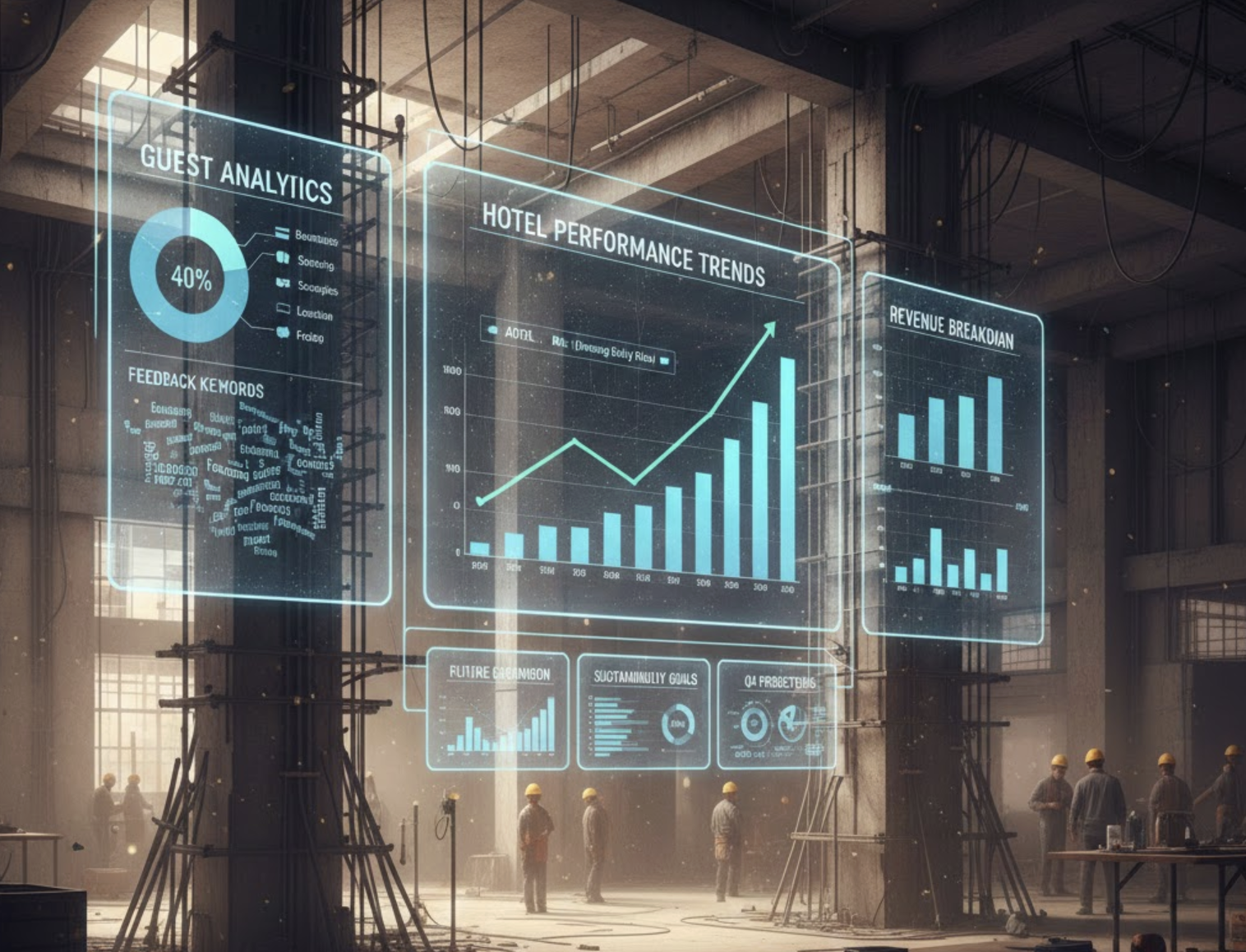
Today’s hotels require rapid visibility across operations, financials, guest satisfaction, and asset performance. The most advanced platforms offer customizable dashboards, real-time MIS reporting, and KPIs for every stakeholder. Self-service BI tools and scheduled reports empower teams to act on trends before they become issues—mirroring the centralized dashboards that drive capital project performance.
Technical & Architectural Best Practices for Smart Hotel Platforms
Beyond features, evaluate the underlying architecture and security of any smart hotel asset management platform.
Cloud-Based, Integrated, and Resilient
Cloud platforms deliver lower upfront costs, easier multi-property administration, automatic updates, and rapid deployment. Look for systems with proven uptime, reliable performance, and local resilience for critical operations like check-in and key issuance. Hybrid options can balance local device needs (POS, door locks) with streamlined cloud management—reflecting the strategy of cloud-first construction solutions.
What is the difference between cloud-based and on-premises hotel management software? Cloud-based hotel management software is hosted offsite and accessed through the internet, providing automatic updates, scalability, and lower IT maintenance. On-premises systems run locally, offering control but at higher operational costs and greater complexity.
API-Driven Ecosystems & Open Integrations
Hospitality thrives on an ecosystem—PMS, POS, accounting, CRM, payment gateways, IoT devices, and more. Robust platforms provide open APIs and pre-built connectors, allowing easy add-on of new modules and partners, and avoiding expensive vendor lock-in. This open ecosystem approach is the same principle powering integrated construction management.
Data Security, Compliance, and Privacy
Demand encryption in transit and at rest, strict access controls, and support for compliance regimes like PCI DSS and GDPR. Audit trails and data residency options are crucial, especially if operating in multiple regions. Just as construction software must safeguard sensitive project contracts, hotel platforms must protect guest PII and financial data.
Reliability & Offline Capabilities
High uptime (aim for 99.9%+) and clear SLAs reduce business risk. Fast user interfaces for front desk, fallback options for core tasks when the internet is out, and a vendor with a proven track record should all feature in your evaluation checklist.
Operational and Organizational Criteria: Usability, Support, and Scalability
Even the most feature-rich platform will fall short if it’s difficult for staff to use or cannot grow with your business.
Intuitive Interfaces and Workforce Adoption
Choose platforms with role-based dashboards, clear navigation, and multi-language support. Great hotel operations management platforms come with interactive help, video tutorials, and sandbox environments for training. Involve frontline staff early in product demos, and opt for phased rollouts—learn from construction tech adoption best practices, where guided onboarding is key.
Strong Vendor Support & Transparent Implementation
Ensure 24/7 support (critical in 24-hour hospitality), migration assistance, regional expertise, and documented reference customers. SLAs should clearly define support expectations, mirroring how mature construction tech vendors guide complex rollouts and deliver ongoing customer success.
Multi-Property Scalability and Portfolio Control
Modern hotel portfolio management systems must enable centralized configuration, chain-wide reporting, loyalty integration, and easy addition of new properties—whether boutique or resort-scale. These parallels to enterprise construction portfolio management ensure your platform won’t hold back expansion plans.
Total Cost of Ownership and ROI
Assess subscription, implementation, integration, hardware, training, and support costs over a 3-5 year period. Evaluate not just cost, but tangible ROI: does the solution deliver labor savings, revenue gains, or improved compliance and auditability? Use this approach as you would when justifying construction productivity investments.
Emerging Innovations: AI, IoT, Sustainability, and the Next Generation of Hospitality Platforms
The future of hotel management is smart, connected, and sustainable. AI-driven hotel management automates repetitive tasks, delivers predictive maintenance, and powers dynamic pricing. IoT devices—thermostats, lighting, occupancy, and water sensors—cut energy costs and support sustainable hotel management, while enhancing the guest’s stay. Platforms now integrate green KPIs, waste tracking, and ESG-facing reporting, vital for both eco-conscious travelers and corporate accounts—much like sustainable management in construction.
Automation in hospitality is increasingly focused on guest messaging, upsell flows, and workflow triggers—such as auto-generating room cleaning upon checkout. Yet, wise hoteliers always keep high-value activities under human oversight, maintaining the balance between efficiency and empathy. This AI-driven operational intelligence echoes advancement in AI construction project management.
A Practical Checklist for Smart Hotel Management Platforms
- Functional depth: PMS covers current/future needs. Integrated, mobile-first housekeeping and maintenance. Insightful guest experience modules. AI-powered revenue management. Real-time, customizable reporting.
- Technical strength: Cloud-first, strong uptime track record, extensible with open APIs, secure, compliant, with robust resilience strategies.
- Operational fit: Intuitive UI, staff-friendly onboarding, and excellent support. Proven scale for multi-property environments. Transparent, ROI-driving cost structure.
- Innovative roadmap: Regular feature releases, emphasis on AI, IoT, sustainability, and guest-centric enhancements.
- Vendor reputation: Referenceable customers, strong support, financial stability, and willingness to partner for success.
Zepth Edge: The Intelligence Edge for Hospitality Performance
While Zepth is renowned for transforming how capital projects are managed, the digital transformation principles embedded in its ecosystem fit seamlessly with what hotels need today. Zepth Edge provides a performance command center for hotel portfolios, integrating real-time financial monitoring, CAPEX control, and asset lifecycle management into one connected platform. What does this mean for hotels?
- CAPEX efficiency: Achieve up to 30% cost savings via structured forecasting and intelligent controls—a true example of hotel CAPEX optimization.
- Revenue uplift: 10% top-line growth through real-time portfolio-wide performance insights.
- Asset reliability: Boost uptime by 50%, proactively managing maintenance and reducing unexpected downtime.
- Portfolio foresight: Drill down or roll up data across every property, powering smart portfolio performance management.
Zepth Edge covers all critical modules—financial overview, occupancy & utilization, guest segmentation, service quality & operations, budget and CAPEX management, asset register & disposal, and advanced MIS reporting. With its focus on structured workflows, transparency, and integration, Zepth brings the same rigor to hospitality that it does to large, complex capital projects. Its cloud-first, scalable architecture, robust API integrations, and enterprise-grade security ensure hotels are future-ready—whether for expansion, sustainability tracking, or digital guest journeys.
To summarize, the smart hotel asset management platform you choose will shape every facet of guest satisfaction, operational health, and portfolio profitability. Evaluate on breadth, depth, innovation, and support—then empower your teams with next-generation tools like Zepth Edge. That’s how hospitality leaders stay ahead in a data-driven, guest-centric world.