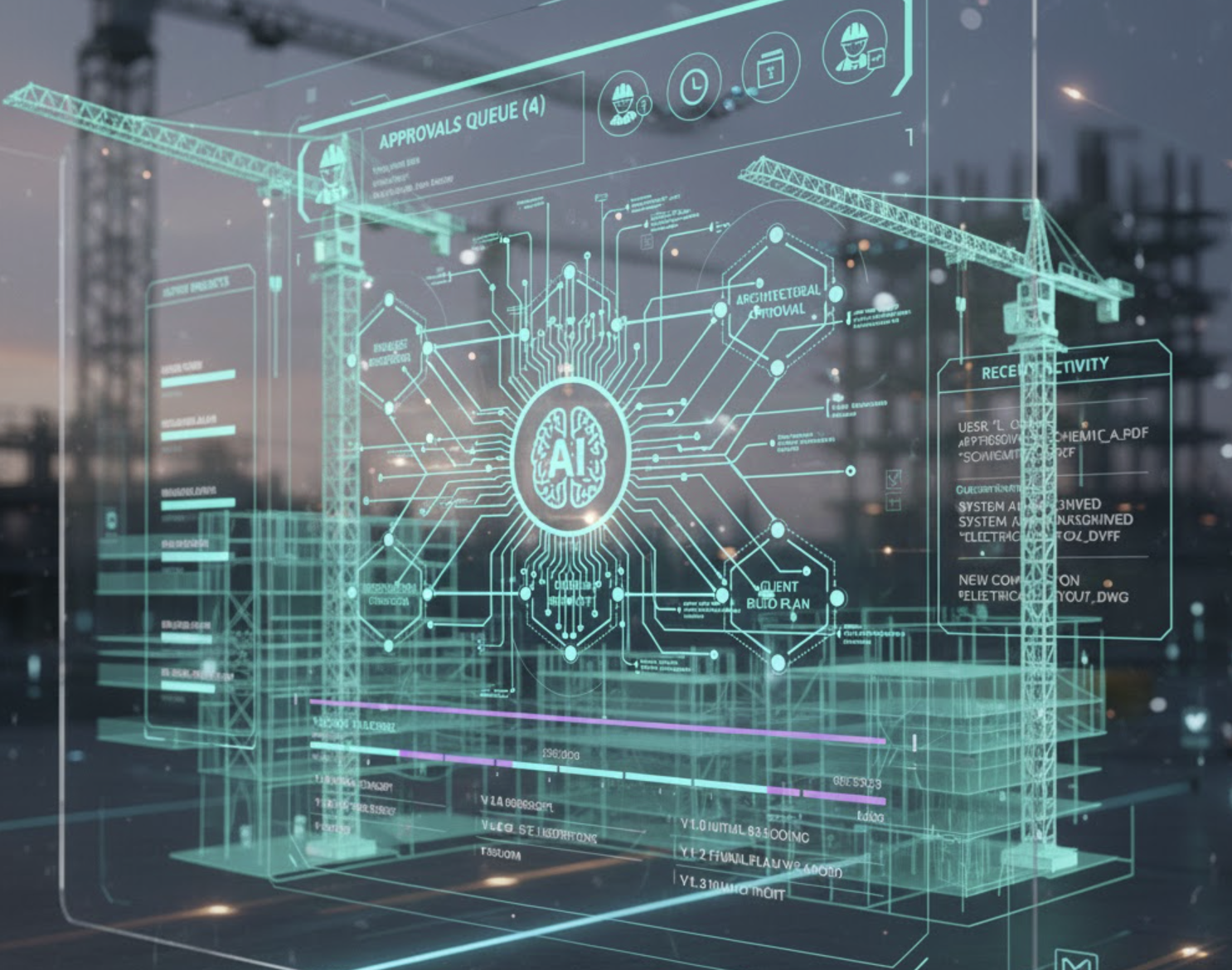
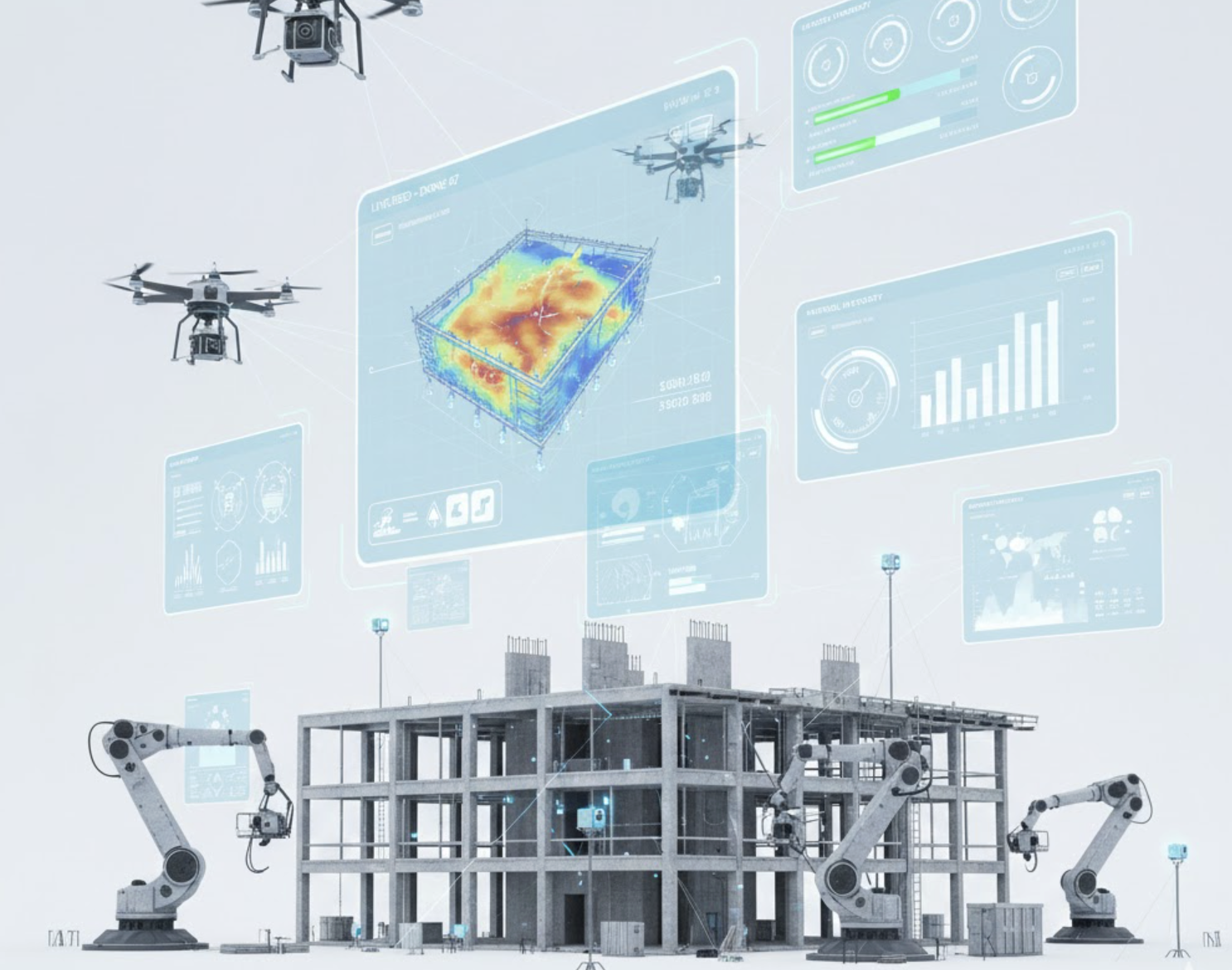
Simplifying contracts with AI-powered document search is changing how construction professionals manage, interpret, and execute critical agreements. Construction project management software increasingly integrates artificial intelligence (AI) to help project teams quickly access, review, and understand complex contracts. This digital transformation boosts collaboration, reduces risks, and ensures compliance—fundamental goals for any construction project, whether a commercial skyscraper or a fast-moving fit-out.
AI in Construction: From Complex Contracts to Clarity
Construction contract documents are notoriously complex. Dozens of stakeholders, rapidly changing requirements, and hundreds—sometimes thousands—of pages of drawings, specifications, and legal requirements make finding a single clause or amendment challenging. That’s where AI document management software shines. These solutions use advanced natural language processing to index, search, and extract context from every project document. As a result, the barrier to contract clarity drops, while the speed of informed decision-making rises dramatically.
With AI-powered project management tools like Zepth Core, construction professionals no longer sift through endless PDFs and emails. Instead, they tap simple search bars, ask questions in plain language, and receive relevant clauses, referenced drawings, submittals, and approval statuses. Teams quickly verify compliance, understand obligations, and flag potential risks, all in seconds. For those wondering, “How does AI-powered document search work in construction?”, it’s about connecting scattered data, automating document review, and surfacing critical context right when you need it.
Enabling Fast, Frictionless Contract Management with Zepth Core
Modern construction project tracking demands robust solutions that handle the whole contract lifecycle. Zepth Core’s construction document management system sits at the heart of this new approach. By unifying modules for submittals, RFIs, specifications, authority approvals, and contract registers, Zepth creates a common data environment for construction—the foundation for true AI search and automation.
- Document Register: Securely stores all contracts, addenda, drawings, and vendor communications for reliable, trackable access.
- Submittals & RFIs: Streamlines workflows to link technical queries, submissions, and responses directly to relevant contract requirements.
- Authority Approval Tracking: Keeps the team aligned on approval statuses and outstanding regulatory documentation, minimizing project risk.
- Mail & Transmittals: Organizes correspondence, ensuring no instruction or amendment slips through the cracks.
- Insights & Analytics: Surfaces trends—such as frequently searched clauses or common non-conformances—to guide smarter risk mitigation in construction.
For construction leaders, these tools provide a leap in contract visibility and control. Centralizing project files and layering AI search gives senior managers and field teams rapid, reliable answers. For example, if a project manager asks, “What’s the retention period for contract deliverables in this project?”, AI retrieval highlights specific contract language—in context—saving hours previously lost to manual searching. This is construction tech innovation in action.
Risk Management, Compliance, and Cost Control: The AI Edge
A central goal of construction risk management is anticipating problems before they escalate. Contracts define quality, timelines, indemnities, and payment terms. Missing a critical clause or misunderstanding a revision can trigger disputes, delays, or cost overruns. With AI risk management in construction, Zepth Core cross-references every project event (such as a reported non-conformance or material submittal) with contract requirements. If a specification is exceeded or compliance is at risk, the platform can flag the issue in real time. This process not only improves proactive risk mitigation but also documents a clear audit trail for disputes or claims.
Financial control teams benefit as well. With construction cost control software embedded in Zepth, project accountants quickly verify what payments and milestones are contractually due. Searching for changes in payment terms, escalation clauses, or warranties becomes a matter of seconds, not days. Those looking for answers such as, “How can AI improve cost forecasting in construction?” will appreciate that integration between contracts, budgets, and real-time analytics takes guesswork out of project financials, bringing clarity to forecasting and ongoing cost control.
Compliance, a perennial challenge in construction, especially for international or sustainability-focused projects, also gets a boost. Construction compliance software in Zepth Core harnesses document search to ensure HSE, ISO, and statutory standards are visible and actionable. Alerts for safety deviations or missing sustainability certifications help teams avoid regulatory penalties or rework. This seamless integration of AI tools for construction not only adds rigor but assures project quality at every stage.
Unlocking Collaboration and Accessibility Across the Lifecycle
Contract management shouldn’t be limited to legal or head office teams. Jobsite management tools within Zepth Core leverage AI to make critical contract information available to everyone from engineers to safety inspectors, in the office or on site. Even mobile-first tools like Zepth Bldz benefit—field workers can retrieve specs or instructions instantly on their devices, accelerating response times and reducing project bottlenecks.
Frequently, project teams ask, “What is a common data environment in construction, and why does it matter?” In plain terms, a common data environment (CDE) is a single platform to store, share, and manage all project information, including contracts, drawings, and communications. This unified approach is essential for AI-powered automation, as it guarantees that search results reflect the latest revisions and all authorized communications. Zepth Core’s integrated modules for document management, task assignment, and real-time data analytics foster true digital collaboration—eliminating silos, confusion, and unnecessary delays.
By supporting seamless BIM (Building Information Modeling) integration and digital twins in construction, platforms like Zepth not only improve document retrieval but drive a holistic approach to construction lifecycle management. Structured data links contract clauses to design intent, asset specification, and jobsite performance. This closes the loop between what was agreed and what is delivered—an ongoing challenge for construction tech innovation.
The Future: AI Construction Automation and Sustainable Project Delivery
AI-driven construction management will continue to evolve, expanding both in power and practicality. Enhanced algorithms enable contract summarization, automatic detection of inconsistencies, and prediction of potential disputes or compliance risks before they occur. As users become more comfortable querying data in natural language, platforms like Zepth will deliver answers, notifications, and automated workflows right when needed—further democratizing contract expertise.
This transformation also supports sustainability, driving green outcomes with smart construction management tools. For instance, AI analytics can flag where contract terms don’t align with energy efficiency targets or where supplier compliance documentation is missing. Real-time project data, integrated with cloud-based construction management, will underpin forecasting tools and ensure continual improvement against environmental goals.
Project managers might ask, “What are the best practices for construction document management?” The answer is clear: centralize data, harness AI-powered search, and automate compliance tracking—all core features of Zepth’s platform. With AI construction platforms leading the digital transformation, construction teams are finally equipped to manage contracts with confidence, speed, and precision—paving the way for safer, more efficient, and sustainable project delivery.