
Monitoring procurement efficiency is essential for construction enterprises that seek transparency, speed, and cost control across large, complex supply chains. Performance metrics stand at the heart of this transformation, and Zepth Flow positions itself as a next-generation procurement management software—an enterprise procurement platform purpose-built to capture, analyze, and optimize every measurable aspect of procurement performance. In this article, we’ll explore not only why these metrics matter, but how Zepth Flow’s real-time analytics and AI-driven automation deliver actionable intelligence across the procurement lifecycle, from vendor management through tendering, bid evaluation, and contract award.
Why Procurement Performance Metrics Matter in Construction
Large-scale construction procurement is both high-value and high-velocity—projects hinge on the ability to orchestrate dozens of vendors, manage changing specifications, and deliver on tight deadlines. Even minor inefficiencies in sourcing, evaluation, or contract administration can trigger budget overruns, missed milestones, and supply chain risk. Relying on spreadsheets or ad-hoc tools can leave decision-makers blind to bottlenecks or unable to enforce procurement compliance software requirements.
This is where a digital procurement solution like Zepth Flow fundamentally changes the game. Its combination of real-time analytics, flexible process automation, and AI-powered insights turns procurement into a transparent, auditable, and continuously optimized process. Leaders gain the ability to see—in the moment—where savings are being generated, which suppliers are meeting standards, and how swiftly procurement workstreams are advancing.
Many project leaders ask: Why are procurement performance metrics so critical in construction? The answer lies in risk mitigation. When performance data is tracked at every step, the organization gains early warning of delays or non-compliance, empowering immediate, data-driven intervention. This transparency supports not only operational reliability but also regulatory and audit readiness.
Core KPI Categories Zepth Flow Tracks for Procurement Efficiency
Zepth Flow’s approach to procurement lifecycle management revolves around robust Key Performance Indicators (KPIs) that reflect the health of the procurement function. These KPIs provide an actionable framework for both procurement workflow automation and strategic monitoring:
- Financial Performance: Cost savings/avoidance, total cost of ownership, spend under management, and cost per invoice.
- Supplier Performance: Supplier lead times, quality scores, delivery accuracy, and continuous improvement benchmarks.
- Operational Efficiency: Cycle times for sourcing, bid evaluations, contracts; process automation rates; and error reduction statistics.
- Compliance & Risk: Adherence to policies and approvals, vendor risk levels, audit traceability, and ESG standards alignment.
- Strategic Alignment: On-time/budget project delivery, stakeholder satisfaction, supplier diversity, and sustainability scoring.
By leveraging Zepth Flow’s procurement analytics and insights, enterprises can tie every project outcome—positive or negative—directly back to specific procurement actions, all tracked in a single source of truth. For example, if an owner is considering how to strengthen supplier reliability, the supplier performance management system dashboard not only highlights on-time delivery rates and recent quality scores, but also enables drill-down into root causes of variances.
How Zepth Flow Measures & Improves Procurement Cycle Efficiency
One of the most immediate transformations Zepth Flow delivers comes in time-based KPIs that directly reflect process efficiency:
Tendering and Sourcing Cycle Time
The duration from RFP/RFQ release through to contract award represents both a risk and an opportunity for cost optimization. Zepth Flow’s enterprise sourcing software combines digital bid management, AI-based evaluation, and real-time collaboration to cut sourcing and tendering cycles by up to 70%. This makes the difference when delivery dates are fixed and every day impacts project schedules.
Bid Evaluation Time
Lengthy manual comparisons of bids represent a major slow-down. With Zepth Flow’s AI supplier evaluation tools and automated scoring engines, clients routinely see 70%+ reductions in evaluation times. This turns weeks into days, making project timelines predictable and accelerating value realization.
PO/Contract Cycle Time
Zepth Flow’s AI-driven procurement automation and digital contract lifecycle management ensure conversion from requisition to executable contract happens swiftly. Dynamic workflows, customizable approval matrices, and digital audit trails not only save time, but also reduce errors by as much as 40%.
A frequently asked question: What are the main ways to reduce procurement cycle times? Automating repetitive tasks with advanced e-procurement software, enforcing standardized process flows, and using AI analytics for faster decision-making are among the most effective strategies. Zepth Flow integrates each of these elements into a connected enterprise procurement experience—making cycle-time reduction expected, not exceptional.
Cost & Spend Efficiency Metrics in Zepth Flow
Tracking procurement’s true impact on organizational spend is paramount. Zepth Flow provides deep analytics around:
Procurement Cost Savings (%)
By centralizing bid management and contract negotiation, applying smart spend analytics in procurement, and supporting better supplier selection, most Zepth Flow users record procurement savings of up to 15% compared to legacy or manual approaches. The platform’s procurement cost control software proactively identifies over-budget bids and flags outlier costs before commitments are made.
Budget vs. Bid Alignment
Real-time data integration ensures that planned budgets, submitted bids, and finalized contract values align at every stage. Project leaders can instantly see where variances are emerging—empowering corrective action and supporting robust cost reduction in supply chain management.
Total Cost of Ownership (TCO)
Modern construction procurement must look beyond acquisition price. Zepth Flow’s contract lifecycle management software tracks long-term costs, maintenance, warranties, and end-of-life considerations—delivering a full picture of the value and risk associated with each procurement decision.
Users often wonder: How can procurement software help achieve cost savings? The answer is multi-dimensional—by standardizing data, automating pattern recognition, and flagging inefficiencies early, advanced procurement platforms enable smarter, faster, and more accountable purchasing. Zepth Flow’s platform exemplifies this with tightly integrated spend analytics and forecasting tools.
The Power of Real-Time Analytics and AI Automation in Procurement Monitoring
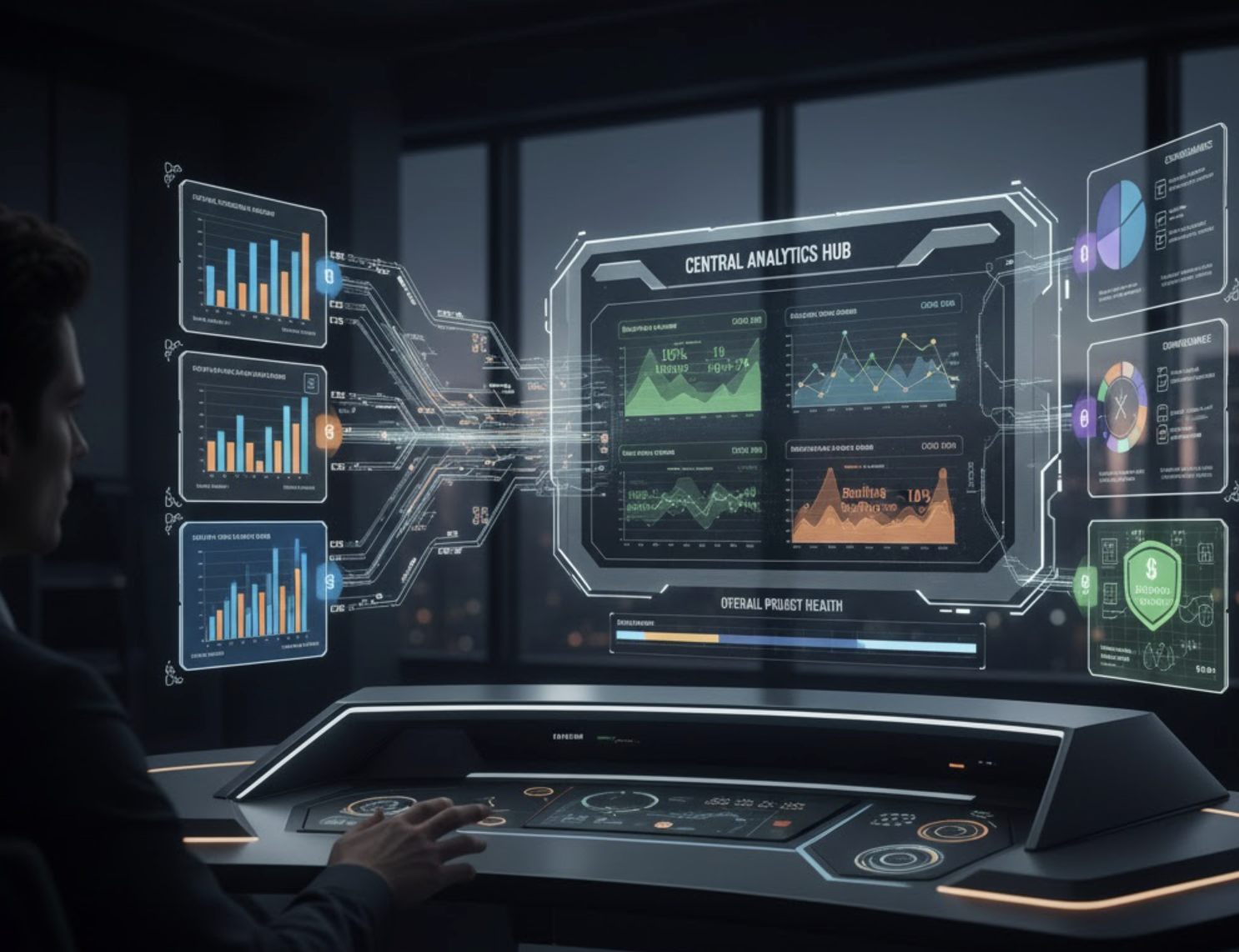
While static reports provide a snapshot, Zepth Flow operates on continuous, live data feeds. Its real-time procurement analytics dashboard brings together all key metrics, letting procurement professionals instantly spot bottlenecks or trends. The inclusion of automated alerts, AI-driven anomaly detection, and baseline benchmarking ensures that issues or opportunities are surfaced early and actioned decisively.
This is particularly transformative in areas like sustainable procurement management and supplier diversity. Zepth Flow’s analytics engine automatically scores suppliers on ESG compliance, carbon reporting, and ethical sourcing—a feature that is gaining momentum as regulatory and societal pressures mount. Such visibility makes it far easier for organizations to drive their procurement transformation strategy towards both commercial and sustainability goals.
But how does AI add value to procurement monitoring? Intelligent extraction of bid data, predictive insights on supplier risk, and side-by-side scoring ensure that decisions are evidence-based and repeatable, reducing bias and error throughout the procurement lifecycle.
Unified Procurement Metrics, Continuous Improvement, and Zepth Flow’s Value
Beyond measurement, Zepth Flow acts as a collaborative procurement ecosystem—one where each stakeholder, from project manager to CFO, accesses the same transparent, up-to-date performance data. This shared platform culture ensures strong supply chain management alignment, robust contract lifecycle management software, and improved communication, all anchored in measurable outcomes.
Key advantages offered by Zepth Flow include:
- Centralized vendor management system for onboarding and integrity checks
- AI-powered sourcing optimization for smarter, faster supplier selection
- Transparent procurement workflows and complete audit trails
- Collaborative contract award and change order management to minimize surprises
- Connected enterprise procurement for harmonized, cross-project analytics
Ultimately, the adoption of smart procurement solutions—anchored in real-time performance monitoring—sets the foundation for sustainable, competitive, and resilient project delivery. Zepth Flow demonstrates how digital transformation in procurement is not only possible, but can be systematically measured and optimized with each project cycle.
As organizations continue advancing their procurement transformation strategy, the right metrics—captured, analyzed, and acted upon—will distinguish leaders from laggards. In today’s connected built world, Zepth Flow is procurement in motion—where every process and partner is measured, improved, and aligned for project success.