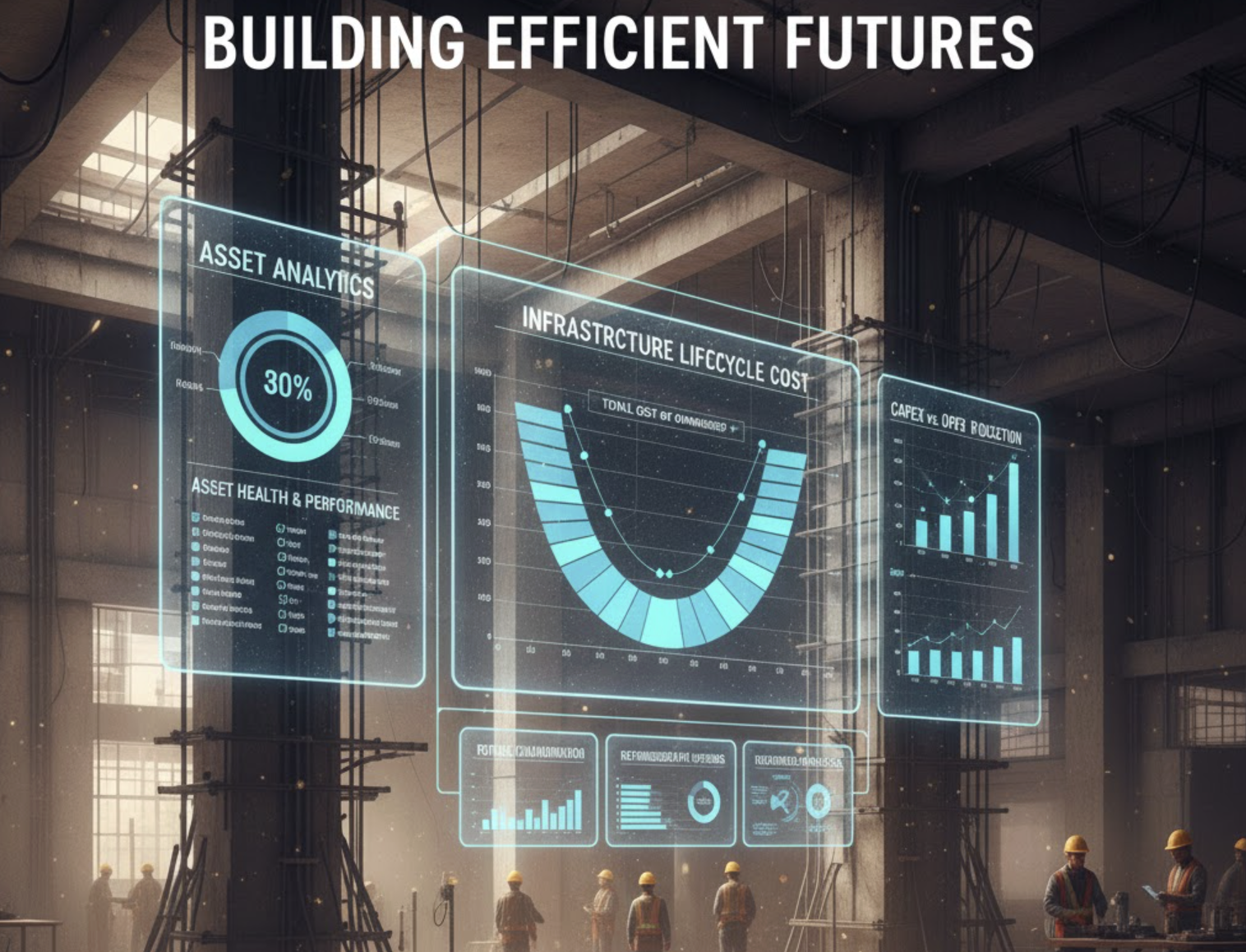

Governance-driven CapEx planning is fast emerging as the foundation of successful construction and infrastructure delivery in Canada. For project owners, developers, and the hospitality industry, deploying advanced hotel management software and hotel asset management platforms not only strengthens financial stewardship but also enables robust compliance, performance visibility, and stakeholder accountability. As Canada’s built environment responds to a new era of climate resilience, ESG, and complex regulatory demands, AI in hospitality and digital transformation solutions like Zepth Edge are redefining what effective capital project governance can – and should – look like.
Understanding Governance-Driven CapEx in Canada’s Built Environment
Capital expenditure (CapEx) extends well beyond simple budgeting – it’s a comprehensive, lifecycle-focused strategy that encompasses planning, procurement, project controls, asset management, and operational optimization. In Canada, the sector’s scale is immense: construction contributes ~7.4% of GDP and employs over 1.5 million people, with annual non-residential investments in the hundreds of billions of CAD. As owners and operators contend with net-zero ambitions, rapid urban expansion, and Indigenous reconciliation, governance-driven CapEx planning is paramount to avoid the costly overruns and delays that have historically marred major projects such as Site C and Muskrat Falls.
But what does governance-driven CapEx mean for a hotel owner, a public agency, or an energy utility? At its core, it’s about instilling formal decision rights, transparent policies, and standards-based controls that align every project stage—from ideation and feasibility to operations and decommissioning—with organizational strategy and regulatory obligations. Platforms like Zepth Edge provide a connected hotel portfolio management system and an AI-driven performance command center where real-time metrics, CAPEX control, and compliance checks can be executed across every property or asset class.
Question: Why is governance so critical in capital project planning?
At its heart, governance ensures that CapEx planning aligns with both strategic objectives and regulatory compliance, while minimizing risk, delivering ESG value, and embedding transparency. These disciplines help deliver projects on time and within budget, and digital tools now make these standards more achievable than ever.
Frameworks and Regulatory Drivers in Canadian CapEx Planning
Federal and provincial authorities wield significant influence over CapEx planning through a dense web of regulations. At the federal level, the Impact Assessment Act (IAA) demands rigorous environmental, social, and Indigenous consultation for major infrastructure. Net-zero legislation, progressive green procurement mandates, and climate resilience standards steer investment toward more sustainable, future-proofed outcomes. Provincial bodies, from Infrastructure Ontario to Alberta Infrastructure, enforce additional requirements, such as standardized P3 (public-private partnership) governance, business-case vetting, and multi-stage approval protocols.
Public sector standards—underpinned by the Treasury Board of Canada and its provincial equivalents—require comprehensive business case substantiation, systematic options analysis, integrated risk registers, and auditable documentation. It’s not just about compliance; public confidence and oversight from auditors and stakeholders mean robust governance processes and digital traceability aren’t optional. Auditors General routinely scrutinize multi-billion-dollar projects, making immutable digital records a must-have.
For instance, hotel groups operating across provinces must comply with varying building codes, environmental regulations, accessibility standards, and Indigenous consultation mandates. A cloud-based hospitality management system with built-in compliance workflows and AI hotel automation platform ensures policies are enforced and audit trails maintained at scale.
- Federal and provincial regulatory frameworks shape project feasibility and scope from the outset.
- Governance expectations center on documented controls, value for money, and lifecycle reporting.
- Digital compliance—enabled by AI-powered platforms—reduces manual errors and strengthens transparency.
- Auditability is essential: consistent digital records prove due diligence and facilitate stress-free audits.
Question: How can hotel operators in Canada manage compliance across different provinces?
By utilizing smart hotel management tools with built-in regulatory templates, operators standardize compliance documentation, manage multiple regulatory requirements efficiently, and maintain transparency across their entire portfolio.
Governance-by-Design: Best Practices Across the Project Lifecycle
Governance-driven CapEx is a full-lifecycle discipline, embedding controls at every junction – from business case formulation and procurement down to asset handover and operations. Zepth Edge brings governance-by-design to life as an integrated cloud platform tailored to Canadian realities.
Portfolio Strategy & Prioritization: Decision-makers need real-time insights into project readiness, strategic fit, ESG impact, and regulatory timelines. Zepth’s dashboards visualize all active and pipeline projects, overlaying budget and risk analytics for optimal resource allocation and scenario planning. For example, hospitality leaders can prioritize hotel upgrades to meet emissions standards or target underperforming assets for refurbishment, leveraging hospitality analytics and insights to support their choices.
Business Case & Feasibility: Governance mandates require structured needs assessments, risk-contingent cost estimates, regulatory assessments, and full documentation of stakeholder consultations including Indigenous engagement. With Zepth Edge, these are digitally captured, version-controlled, and connected to strategy via clear success metrics – satisfying both internal boards and external reviewers.
Design and Planning: Document management, change control, and traceable review workflows are non-negotiable. Zepth integrates with BIM and common data environments, ensuring every design change, RFI, or compliance check is governed by permissions and audit logs.
Procurement & Contracts: Transparency in procurement—from RFP release to bidder selections and contract execution—is critical, particularly in the public sector. Standard contract forms, collaborative contracting, and ESG-focused evaluation criteria are tracked through Zepth Edge’s centralized contract management and approval workflows, reducing risk of disputes and improving fairness.
Execution & Monitoring: Real-time AI-driven performance dashboards track cost, schedule, and risk KPIs, backed by automated alerts for anomalies such as escalating change orders or lagging productivity. Safety compliance, quality checks, OPEX/CAPEX budget triggers, and issue logs are consolidated, giving executives and operational teams unified, up-to-date intelligence.
Handover & Operations: Structured digital closeout ensures smooth transition to facilities management, tying asset data, warranties, and lessons learned into the hotel’s or asset owner’s ongoing operational optimization. Full lifecycle asset tracking enables hotel lifecycle optimization and ensures value is realized far beyond construction handover.
Key Sector Use Cases and Zepth Value
Governance-driven CapEx isn’t limited to large public infrastructure. Every sector faces unique regulatory, stakeholder, and performance hurdles:
Public Infrastructure: Transparency and auditability are vital for transit, highways, and hospitals. Zepth Edge powers multi-party collaboration, break-resistant digital records, and structured workflows supporting government and auditor scrutiny.
Energy & Utilities: From climate risk analysis to stringent permitting, Zepth supports structured documentation—covering scenario planning, ESG metrics, and rigorous compliance tracking—across grid expansions, renewables, or pipelines.
Commercial Real Estate: Hotel and retail developers use Zepth as a central data room for investment committee reviews, sustainability certifications, and pre-construction risk/governance reporting, ensuring sound capital allocation.
Industrial Facilities: Integration of CapEx planning with operational schedules and process safety records is automated. Zepth coordinates multi-phase brownfield projects and ensures every modification passes through compliance and risk workflows.
Question: What is the best way to monitor capital project budgets and risks in real time?
Adopting a cloud-based hospitality management and analytics platform, such as Zepth, allows users to monitor budgets, risk exposure, and forecast outcomes using customizable dashboards and real-time reporting features.
Advancing Governance: Digital, AI and Beyond
Real innovation in CapEx governance is found at the intersection of AI in hotel budget planning, digital workflow automation, and predictive analytics. Today, platforms like Zepth Edge do more than replace manual spreadsheets—they predict, alert, and ensure compliance by design.
AI-powered hospitality management and AI asset management software sift through thousands of project variables to highlight early warnings of cost or schedule overruns. AI-driven text analytics flag systemic issues from incident reports or recurring RFIs. Collaborative contracting platforms, meanwhile, facilitate open communication and true risk-sharing among owners, designers, and contractors—enabling new procurement models that emphasize transparency and mutual accountability.
With real-time hospitality data analytics, owners can benchmark performance, validate cost estimates, and optimize asset lifecycles against both industry standards and custom KPIs. Integrating ESG, Indigenous engagement, and community benefits into every project phase isn’t just best practice; it’s a compliance obligation increasingly required by capital markets and green financing instruments. Zepth’s flexible tagging and categorization modules make ESG and compliance tracking embedded, not bolted-on.
Sustainability-linked or green bonds, mandatory in many hotel and public projects, create new reporting demands. Zepth’s centralized KPI tracking ensures all sustainability-linked data is continuously monitored and available for lenders, investors, and regulators.
Making Governance Work: Best Practices for Canadian CapEx Planning
Canadian leaders can future-proof their CapEx investment and project performance by institutionalizing governance best practices. These include:
- Establishing formalized governance frameworks: Policies, stage-gates, decision trees, and escalation paths are codified in digital playbooks and enforced through workflow automation.
- Embracing data-driven benchmarking and planning: Historical and real-time data drive more accurate forecasts, risk allowances, and performance improvement.
- Integrating ESG, climate, and Indigenous objectives early: Custom variables and mandatory KPIs ensure every decision addresses social, environmental, and regulatory outcomes.
- Standardizing forms and automating approvals: Embedded controls reduce human error and ensure robust audit logs.
- Maintaining transparency and auditability: Secure, cloud-based storage with version control and immutable audit trails is essential for passing public or investor audits with ease.
Zepth Edge amplifies these practices by weaving them into configurable modules for budget management, CAPEX tracking, risk mitigation, asset lifecycle management, and stakeholder engagement—elevating every project’s governance maturity and compliance posture.
Why Zepth is the Operating System for Governance-Driven CapEx
Zepth Edge stands at the forefront of Canada’s digital transformation in capital project governance. It fuses AI-led operational intelligence in hotels with a unified platform for financial management, asset tracking, procurement, and portfolio monitoring. By offering real-time, customizable dashboards, centralized risk registers, full lifecycle documentation, and role-based governance workflows, Zepth empowers owners, executives, and project teams to drive cost savings, boost asset reliability, and achieve regulatory excellence.
Zepth Edge is purpose-built for the Canadian context, enabling everything from Indigenous engagement tracking and ESG compliance to rigorous audit readiness and cloud-based collaboration. Its out-of-the-box modules tackle hotel CAPEX optimization, OPEX management, and asset lifecycle management—eliminating manual silos and reducing errors. Automated reporting ensures boards, lenders, and public bodies receive the insights and documentation they demand, anytime, anywhere.
Whether steering public infrastructure, energizing the utilities grid, launching hotel renovations, or scaling industrial plants, Zepth delivers the next generation of data-driven hospitality management and governance-led CapEx stewardship. With Zepth, Canadian owners convert policy and compliance demands into project value—realizing better outcomes for stakeholders, communities, and future generations.