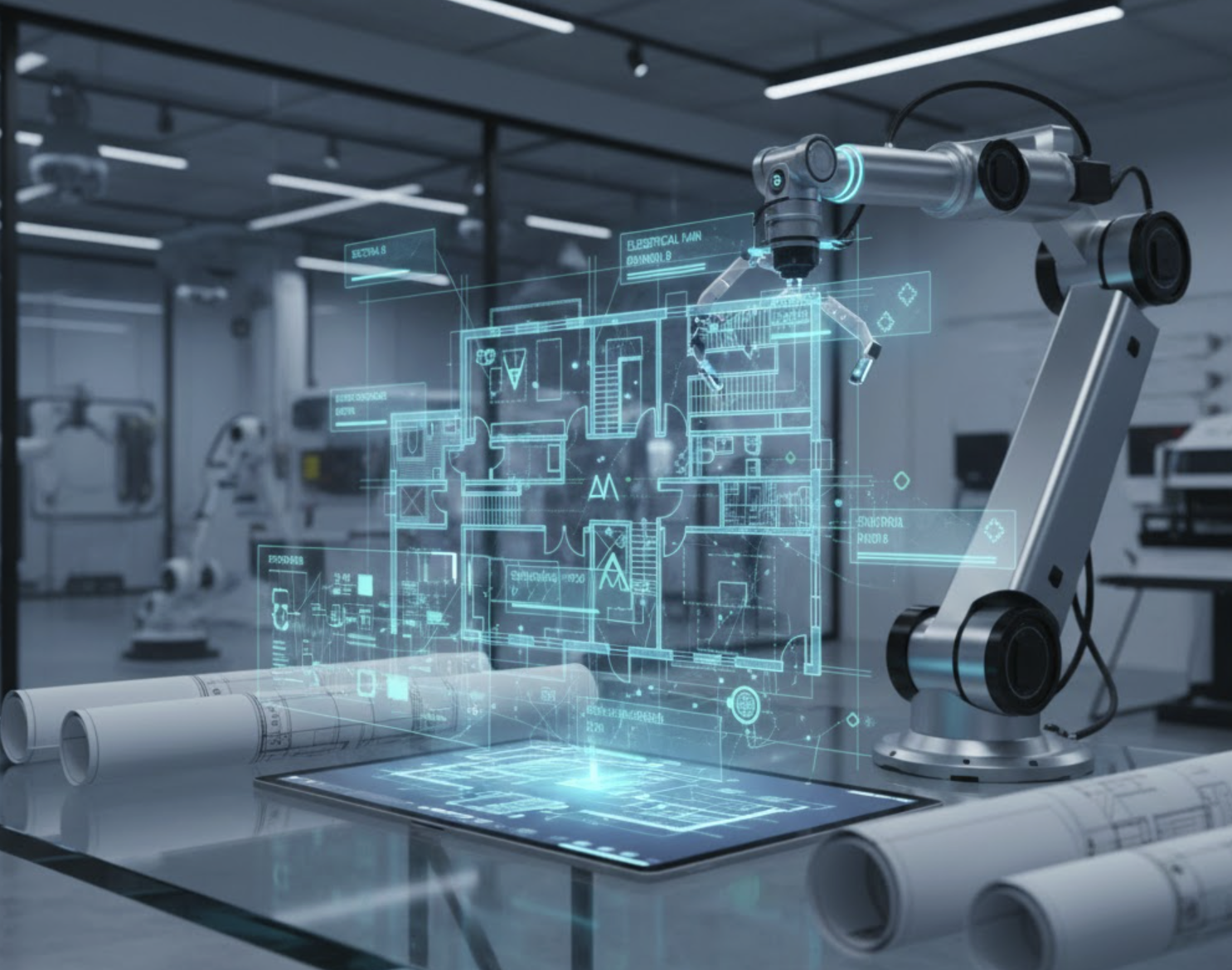

Construction project management software is at the heart of the modern jobsite transformation. Gone are the days when construction sites thrived exclusively on blueprints and grit; today, advances in drones, AI-powered project management, IoT, and the cloud are reinventing how projects get built. This wave of technology has given rise to smarter construction sites—connected, visual, and increasingly automated—signaling a digital leap in safety, efficiency, and predictability. With solutions like Zepth Core, the future isn’t just in planning; it’s already on site.
Why Construction Sites Are Getting Smarter
Across the construction industry, project teams wrestle with tighter margins, persistent labor shortages, rising costs, and the demands of complex, multi-stakeholder projects. This pressure cooker has accelerated the adoption of digital tools, elevating platforms built for construction lifecycle management software from optional upgrades to operational necessities. Historically, construction has lagged behind manufacturing or logistics in productivity and digitization, but this gap represents an immense upside for companies willing to embrace automation, analytics, and coordinated data environments.
What exactly defines a smart construction site? At its core:
- Continuous data capture via drones, sensors, cameras, and wearables.
- Seamless integration on centralized common data environment for construction platforms like Zepth Core, joining field, design, finance, and risk data.
- Real-time AI in construction: turning raw site data into insights, predictions, and automated alerts for timely decisions.
- Enhanced safety, compliance, predictability, and collaboration across distributed teams.
A simple question emerges: “What digital tools make construction sites more efficient?” The answer increasingly includes AI-driven construction management platforms, drones, and real-time collaborative solutions that unify project stakeholders around live site data and actionable insight. This marks a new era of technology-enabled construction, where smart platforms are foundational—not peripheral.
Drones: The Aerial Backbone of Smart Sites
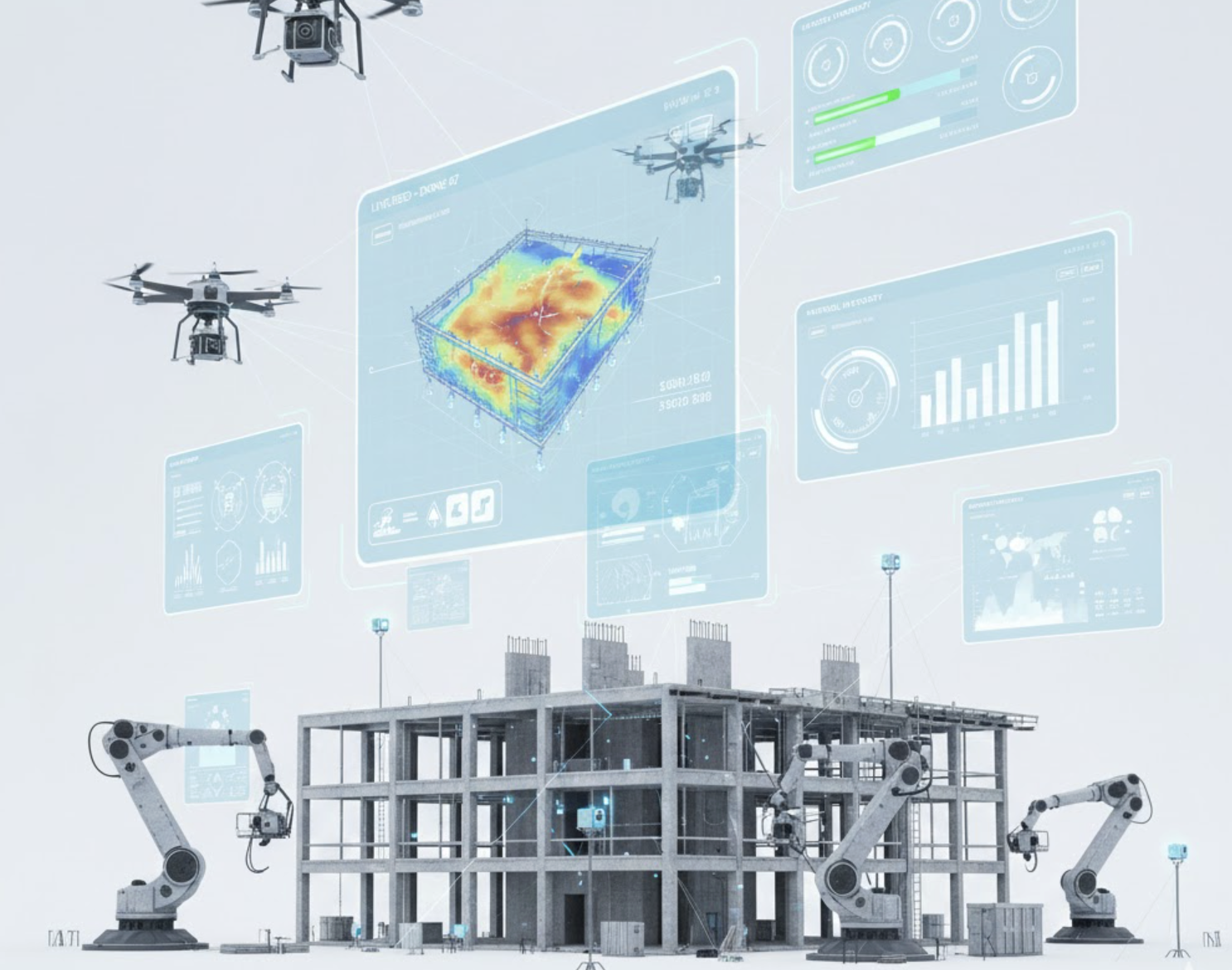
Drones have soared from niche curiosity to indispensable jobsite management tools, revolutionizing how teams survey, document, and inspect construction activities. Fitted with high-resolution cameras, LiDAR, and thermal sensors, drones bring the sky’s vantage to earth, making construction more visual and accurate.
Core Drone Use Cases
The integration of drones in construction speaks directly to time and safety. For instance, site surveys that traditionally consumed days now take mere hours—a drone can map up to 120 acres per hour compared to just 5 acres by manual teams. The outputs, like orthomosaic maps, 3D models, and LiDAR point clouds, fuel everything from site grading to preconstruction planning. Zepth’s Zepth360 visual reporting module extends this value, enabling instant capture and sharing of visual progress tied to the project’s digital model, transforming raw drone visuals into actionable project updates.
Key drone-enabled benefits include:
- Progress monitoring: Frequent flights supply daily or weekly as-built imagery for side-by-side comparison against BIM or design plans.
- Safety inspections: Drones access high-risk zones—rooftops, scaffolds, deep cuts—keeping workers safely on the ground while scanning for hazards like missing PPE or unstable structures.
- Inventory and asset tracking: Overhead views help pinpoint equipment or materials, prevent theft, and improve logistical planning with real-time data.
- Logistics & planning: During preconstruction, drones assess ground conditions, environmental impacts, and optimal staging areas.
- Earthworks and volumetrics: Volumetric analysis of stockpiles and excavation helps keep projects on budget and on schedule.
Using aerial mapping and regular drone documentation has been shown to reduce field survey costs, minimize rework, and accelerate stakeholder alignment. Progressive platforms, such as those supporting BIM integration and digital twins, let teams annotate and measure changes directly on drone imagery, merging the field’s reality with the digital model. It’s not surprising that real-time construction project data—much of it captured by drones—is fast becoming the lifeline for proactive project delivery.
Artificial Intelligence: From Data to Decisions
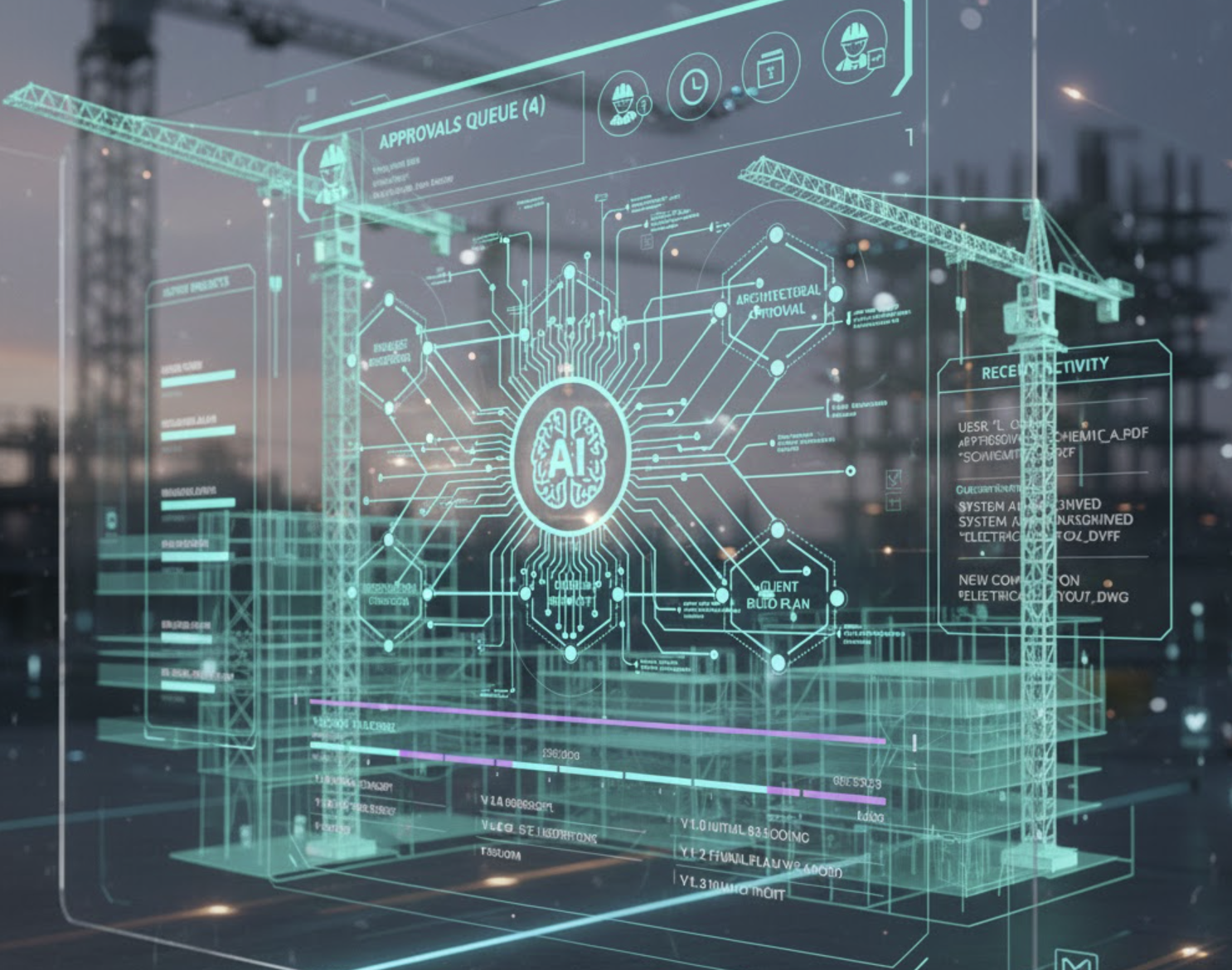
If drones are the eyes and ears of the smart site, AI is the brain. Intelligent orchestration platforms—like Zepth Anly—are redefining AI in construction management by automating data analysis, surfacing insights, and driving proactive action. AI in construction is less about hype and more about practical, daily improvements in safety, quality, and efficiency.
AI for Safety and Risk Management
Computer vision AI, paired with jobsite cameras and IoT sensors, can scan the site continuously for hazards—unclipped harnesses, blocked exits, unsafe machinery, or missing guardrails—and fire instant alerts for rapid mitigation. This automation increases both speed and accuracy compared to traditional manual inspections. In complex risk environments, ML models in AI construction automation mine daily reports, RFIs, and incident logs to predict which tasks or subcontractors present the highest risk, empowering managers to preempt problems instead of reacting post-event.
Teams can now answer confidently: “How can AI improve construction site safety and compliance?” By automating hazard detection, providing predictive insights on high-risk activities, and ensuring compliance with health, safety, and environment (HSE) regulations—via modules like HSE Compliance, Incident Reporting, and Safety Violation Tracking—smart platforms help reduce incidents and insurance claims while ensuring every team member goes home safe.
AI for Quality, Progress, and Asset Control
Quality assurance benefits immensely from AI’s ability to analyze 3D scans, photos, and videos, automatically flagging deviations from specifications or missing components long before they escalate into costly rework. Platforms that unify AI-powered construction analytics and insights—like Zepth’s Non-Conformance, Inspections, and Material Inspection modules—streamline resolution and documentation of quality issues.
AI-infused drones can conduct side-by-side comparisons of as-built surveys with BIM in real time, offering automated, impartial valuations of progress against schedule. Construction forecasting tools use these data streams to project likely delays or cost overruns, arming managers with the early warning system and the flexibility they need to maintain momentum.
On the asset front, IoT sensors continuously monitor the condition of heavy machinery, sending streams of data on vibration, temperature, and usage patterns. AI then detects anomalies and recommends preemptive maintenance, slashing the risks and costs of unplanned breakdowns. This extends to complex MEP systems on site, reducing downtime and ensuring project delivery stays on track.
Platform Integration: Bringing It All Together
For the smart site to deliver its full potential, cloud-based construction management platforms must centralize jobsite, project, and financial data into unified, actionable dashboards. Here, Zepth Core excels as the central nervous system for tomorrow’s jobsites. With modules for Jobsite Management, Document Management, Project Financials, and Risk Management, it delivers a truly connected, data-driven experience.
Its strengths include:
- Jobsite management tools: Covering inspections, incident reporting, daily and progress reports, snag lists, non-conformance tracking, and HSE compliance, all structured to reduce risk, speed resolution, and enforce standards.
- Document management: Secure, indexed control of every contract, submittal, RFI, drawing, or specification; streamlining review cycles and version control.
- Financial management: Integrates construction cost control software and project budgeting tools for construction, enabling teams to track actuals, forecast overruns, and keep the project financially healthy.
- Risk management: Centralized Risk Register, mitigation planning, and proactive AI risk management in construction insights for resilient project delivery.
One might ask: “Why do construction projects need integrated management platforms?” When field data, documentation, schedules, and risks are all siloed, miscommunication, delays, and overruns thrive. A platform approach—where everything from construction submittal software to AI document management software is plug-and-play—ensures information flows seamlessly, giving every team instant clarity, actionable intelligence, and historical records for compliance or dispute resolution.
Looking Forward: The Future of Smart Construction Sites
Technology’s footprint on the jobsite is expanding rapidly. Within the next decade, many expect to see a blend of autonomous drones, AI-driven robots, and AI orchestration platforms like Zepth Anly collaborating in real-time—linking the field to virtual twins and predictive analytics engines in the cloud. The result will be a jobsite where resource allocation, safety, schedule, and cost are continuously optimized. This directly supports sustainable construction management, empowering teams to reduce waste, lower emissions, and deliver long-term value to owners and communities.
To summarize, the fusion of jobsite management tools, smart drone solutions, AI construction platform analytics, and integrated document and financial controls is what will define winners in the coming wave of construction industry digital transformation. The Zepth ecosystem, with its dynamic and scalable modules, stands as a model for this evolution—delivering smarter, safer, and more predictable projects from the ground up.
What is the role of AI in construction project management? AI enables managers to automate routine monitoring, anticipate risks, optimize the schedule, improve safety, and make more informed decisions using real-time construction project data. By bridging the information gap between field and office, AI and smart platforms like Zepth Core make it possible for modern construction teams to break new ground—literally and figuratively—every day.