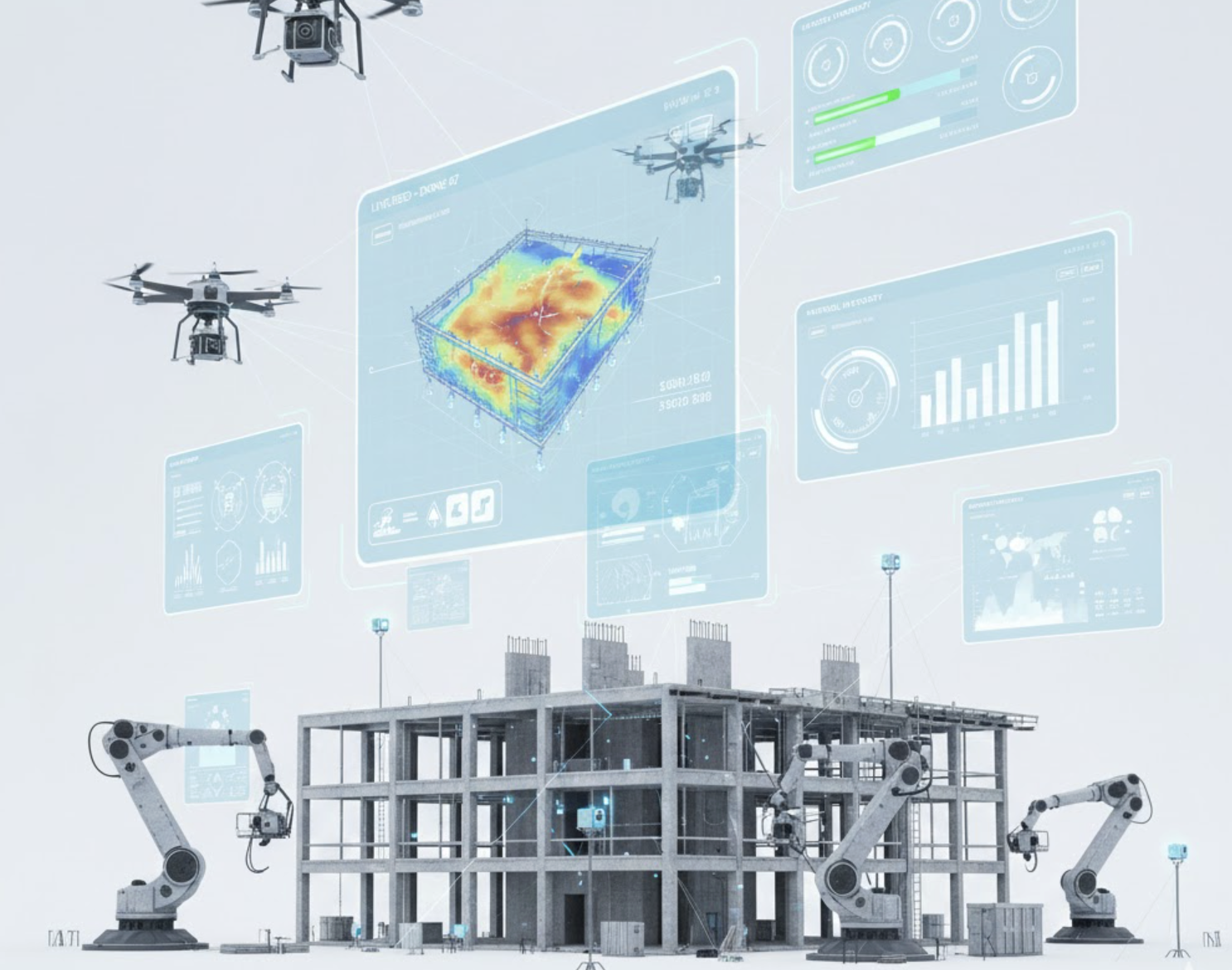

AI in preconstruction is transforming design and estimation processes, enabling construction project teams to automate takeoff, optimize design, enhance prediction, and make robust, data-driven decisions. In a landscape plagued by manual bottlenecks and fragmented data, construction project management software powered by AI brings order, speed, and unprecedented accuracy. Embracing AI construction automation empowers organizations to compress timelines, raise the bar on bid reliability, and minimize downstream rework—a leap forward in the digital transformation of the built environment.
Preconstruction Challenges—and the AI Advantage
Preconstruction remains one of the most data-heavy and error-prone phases of the construction lifecycle. Project teams juggle a massive volume of drawings, specifications, RFIs, addenda, and evolving versions that increase the risk of missed scope and inconsistency. Manual processes—such as quantity takeoffs and spreadsheet-based estimation—slow work and introduce errors that are difficult to eradicate at scale. Furthermore, incomplete early designs and highly volatile labor and material markets make forecasting challenging, leading to padded contingencies and frequent change orders.
The fragmentation of preconstruction data—split between design, estimating, planning, and operations—can create both bottlenecks and opportunities for costly rework. The introduction of AI-powered project management solutions addresses these pain points. Organizations report up to 75% shorter preconstruction cycles and up to 97% estimation accuracy with AI-driven tools. Automated quantity takeoff software can save estimators 90% of their time, freeing them to bid more work without additional staff. AI’s ability to reduce design decision volume by up to 80% and save up to 70% in design time, as seen in industry case studies, explains why digital adoption has become critical in modern firms.
Core AI Technologies in Preconstruction
Several foundational AI and construction tech innovation technologies are converging in the preconstruction field. Here’s a breakdown:
- Computer Vision – Reads and interprets 2D drawings and PDFs, automatically detecting doors, windows, walls, and spaces. This underpins automated quantity takeoff and streamlines labeling, space classification, and design revision comparison.
- Machine Learning (ML) – Learns from historical projects to sharpen cost, duration, and risk predictions. ML flags recurring risk areas—like consistent drywall labor overruns or MEP scope gaps—across new estimates.
- Natural Language Processing (NLP) – Extracts key clauses, scope gaps, or risks from project documents and communication logs, while semantic search makes relevant lessons and benchmarks easy to access for estimators and planners.
- Generative AI – Produces a range of design options, schematic layouts, and alternate scenarios that meet objectives in cost, sustainability, and compliance. This includes instant conceptual estimates based on minimal user input.
- Predictive Analytics – Merges internal and external data streams, such as market indexes, weather, or supply chain signals, to forecast project-specific cost trends, schedule pressures, and contingency requirements with high precision.
With these platforms available, a natural question arises: How can construction firms leverage AI to save time and money in preconstruction? By integrating these technologies, project teams can improve accuracy, speed up workflows, and unlock data-driven decision-making, making AI a must-have for firms looking to stay competitive.
AI-Driven Transformation in the Design Phase
During the earliest stages of a project, AI-driven construction project tracking software and analytics help teams build feasibility and manage design intent. Site data, zoning codes, market benchmarks, and comparable projects are rapidly parsed by AI, providing developers and owners with robust scenario analysis and clear, data-supported go/no-go decisions—minimizing expensive missteps.
AI’s power in conceptual cost modeling makes early budgeting fast and accessible. Even when a project is little more than an idea, historical analogs and market intelligence can instantly generate feasible budget ranges based on project type, location, and scale. Teams can test “what if” changes in design—such as increasing building height or adopting a new façade—to immediately evaluate potential cost and schedule deltas. This iterative, data-first process leads to more grounded bids and enables early-stage course correction, which can be vital in volatile markets.
In design development, generative AI tools and AI-powered BIM platforms bring a new level of optimization to the process. Thousands of design options, each meeting constraints of cost, performance, code, and sustainability, can be generated and evaluated in moments. Integration with BIM (Building Information Modeling) enhances clash detection, code compliance, and predictive scheduling, making models both smarter and directly actionable for downstream teams.
Crucially, AI-driven construction analytics and insights offer real-time feedback loops. For example, a planner might ask: How does changing the material or design geometry affect the estimate and schedule? With instant answers from AI, value engineering efforts become proactive rather than reactive. This technology empowers interdisciplinary collaboration—architects, estimators, and planners all see the impact of tweaks live, streamlining approvals and reducing the need for costly redesigns later on.
Automated Estimation, Quantity Takeoff, and Risk Prediction
The estimation and takeoff process is notorious for being time-consuming and susceptible to omissions or duplications. AI-driven construction submittal software automates drawing recognition and quantification, scanning uploaded plans to detect, label, and measure every door, window, wall, and space. This not only speeds workflow—enabling estimators to double their bid output without expanding teams—but dramatically reduces the risk of incomplete scope. With comprehensive inventories, all structural elements are considered in the estimate, increasing accuracy and bid competitiveness.
What are the best practices for implementing automated takeoff solutions? Many firms start with repetitive, high-volume building types—such as multifamily residential or warehouse projects—to maximize productivity gains. However, even with automated systems, human expertise remains essential for final review and validation. Construction teams use construction project management software like Zepth Core’s Jobsite Management and Document Management modules to ensure AI-generated takeoffs and estimates are traceable, auditable, and aligned with evolving project documentation.
Predictive analytics go a step further, leveraging both historical and real-time market data to forecast material and labor costs, schedule risks, and contingency requirements. By understanding which project variables are most likely to tip the scale, estimators and managers can prioritize risk mitigation efforts before the project breaks ground. Sophisticated construction risk management modules enable teams to capture potential risks, devise mitigation strategies, and monitor contingency needs, all powered by AI-driven insights.
The Zepth Advantage for AI-Enabled Preconstruction
Zepth Core brings together the best of cloud-based construction management, AI-powered automation, and actionable analytics in a single, unified platform. Its suite of modules, including:
- Jobsite Management – Streamlines the flow of field inspections (including snags, HSE, incident reports), captures daily progress and enables robust construction lifecycle management software.
- Document Management – Maintains a centralized, common data environment for construction documents, automating submittal workflows, RFI management, and ensuring real-time compliance with evolving project requirements.
- Project Financials – Provides advanced construction cost control software and forecasting tools, ensuring tighter estimate-to-expenditure alignment.
- Risk Management – Features a powerful risk register, mitigation plan tracking, and risk reporting, turning risk data into actionable project intelligence for proactive management.
- Insights & Analytics – Delivers customizable dashboards that provide key decision-makers with the data they need to adjust plans in real time and optimize outcomes.
Imagine asking: How can construction analytics and AI tools improve the sustainability of projects during preconstruction? By analyzing materials selection, design alternatives, and site logistics, AI can recommend strategies that minimize embodied carbon, optimize energy efficiency, and ensure compliance with environmental codes—all before the first shovel breaks ground. Sustainable construction management begins at the design desk, and smart AI-driven tools make it actionable at scale.
Future-Ready: Data Integration and Industry Impact
The impact of AI-driven construction management extends far beyond efficiency. Connecting design, estimation, scheduling, and procurement within a digital twin environment or BIM-integrated workflow creates a real-time feedback loop where every stakeholder—from architect to estimator, owner to subcontractor—benefits from accurate, up-to-date information. This interconnectedness is key for firms advancing their construction industry digital transformation efforts.
AI’s ability to surface lessons learned, automate compliance documentation, and track project costs in real time elevates both confidence and bottom-line outcomes. With features such as automated transmittals, comprehensive audit trails, authority approval tracking, and structured meeting management, solutions like Zepth Core ensure that every decision is recorded, traceable, and defensible. Project budgeting tools for construction, combined with AI-based financial forecasting, allow teams to spot overruns early and adjust procurement and design strategies to avoid budget shocks.
What is the benefit of using a common data environment for construction? Centralized and AI-enabled, it harmonizes information flows, decreases disputes, and makes handover between teams seamless. This digital backbone supports secure document sharing, rigorous version control, and live project status updates, all accessible through the cloud and on mobile devices.
As the construction sector looks forward, embracing smart construction management tools and AI-powered platforms will not only accelerate project delivery but set a new standard for risk mitigation, stakeholder confidence, and sustainable performance. Zepth Core, built from the ground up as an AI construction platform, situates your team at the forefront of this transformation.
The next wave of industry leaders will be those who harness AI, not just for efficiency, but for strategic foresight—turning every byte of project data into a competitive edge from design to delivery.